139 Demos in One Webinar: Tekmetric’s Full-Funnel Webinar Playbook for Converting Attendees
Breaking through the noise in B2B marketing takes more than just a well-timed webinar—it requires a strategy built around delivering value across the entire customer journey. That’s exactly what the team at Tekmetric set out to build.
What began as an experiment quickly evolved into a repeatable, full-funnel engine. By designing webinars that were not only educational, but segmented, strategically promoted, and fully integrated with sales, Tekmetric’s team drove measurable business impact:
- 139 demos booked
- 302 deals influenced
- 1,484 attendees
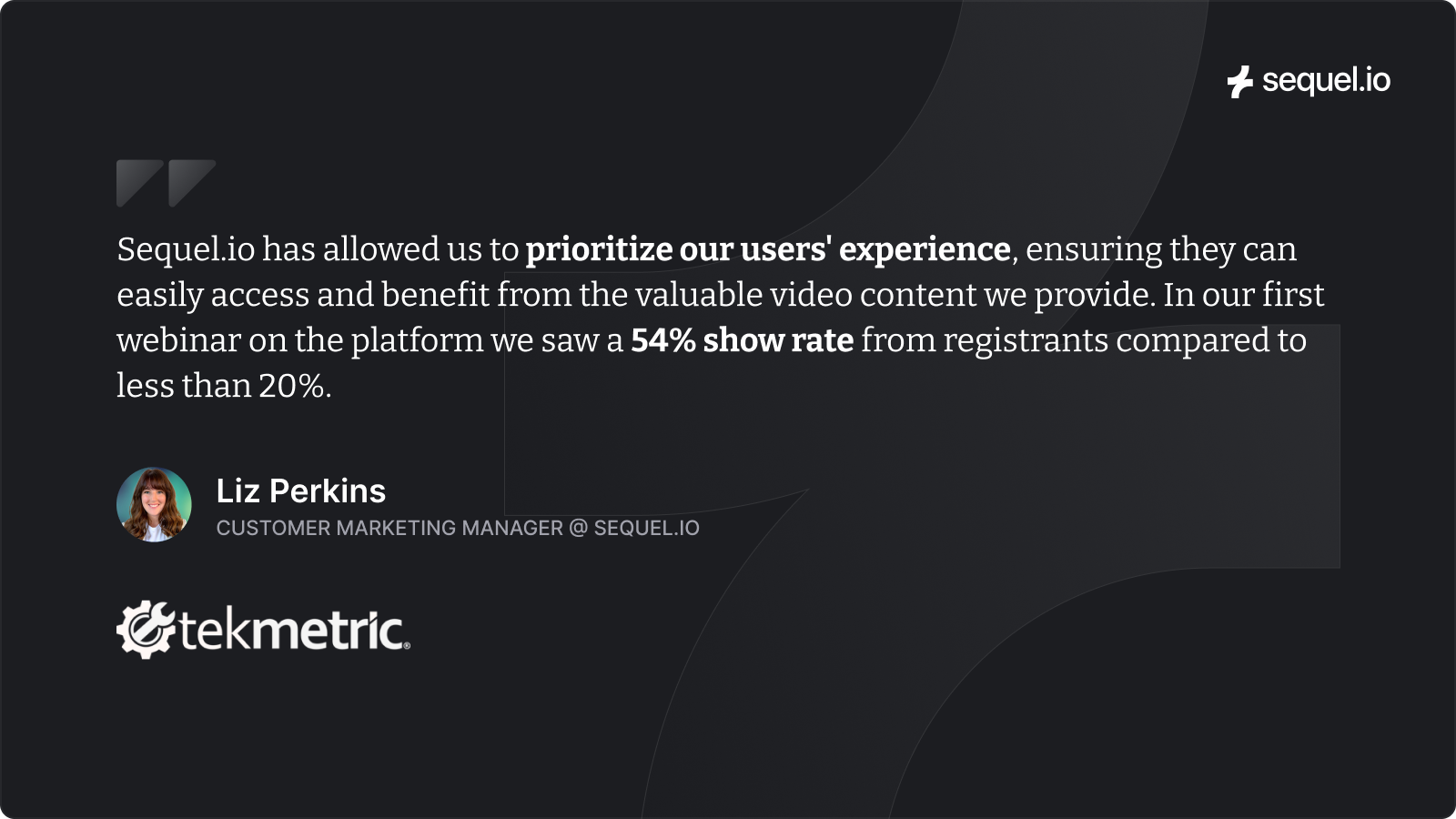
In this playbook, we’ll break down how Liz Perkins, Customer Marketing Manager, and Taylor Charette, Demand Generation Manager, designed and operationalized a webinar program that not only engaged—but converted.
The Strategy: A Full-Funnel Webinar Engine Built for Revenue Impact
At the center of their program is a six-part framework designed to support operational scale, increase engagement, and enable sales activation. From the initial buildout of tech and automation to the way they repurposed content post-event, the team is intentional at every step.
Step 1: Laying the Foundation with the Right Tech and Workflows
All of their webinars are embedded directly on their website using Sequel.io, which allowed them to fully control the attendee experience. By keeping registrants on their own site, they were able to increase session engagement, expose users to additional content like case studies or pricing, and collect valuable first-party data. Hosting webinars natively also made on-demand availability seamless, turning each session into a long-term asset.
Behind the scenes, Tekmetric connected Sequel to Salesforce and Marketo, ensuring that attendee behavior—like poll responses, Q&A participation, and CTA clicks—is automatically synced into their CRM. This makes it easy for Sales to act quickly on high-intent signals while eliminating manual data cleanup. Marketing can automate registration confirmations, reminders, and follow-ups based on engagement behavior, allowing their team to spend more time on strategy and less on operations.
Internally, teams stay aligned using Slack notifications and shared campaign dashboards. Sales reps receive real-time visibility into which accounts register or engage, and Marketing has access to templates, playbooks, and pre-approved content for each type of webinar they ran. The result is a collaborative system that could scale across teams and programs.
Step 2: Building a Multi-Tiered Content Strategy
Live demos are hosted biweekly and serve as a high-intent conversion opportunity for prospects actively evaluating their platform. These sessions are interactive, featuring real product walkthroughs that align with what prospects have been exploring in their buying journey.
To expand their reach and deliver value to a broader audience, they also run thought leadership webinars twice a month. These sessions focus on trends in the auto repair industry, business optimization tips, and real-world challenges shop owners face. They are built to resonate with both prospects and existing customers.
Finally, quarterly product update webinars help drive retention and feature adoption. These are targeted to existing customers and focused on deep dives into new releases and how to get the most from Tekmetric’s platform.
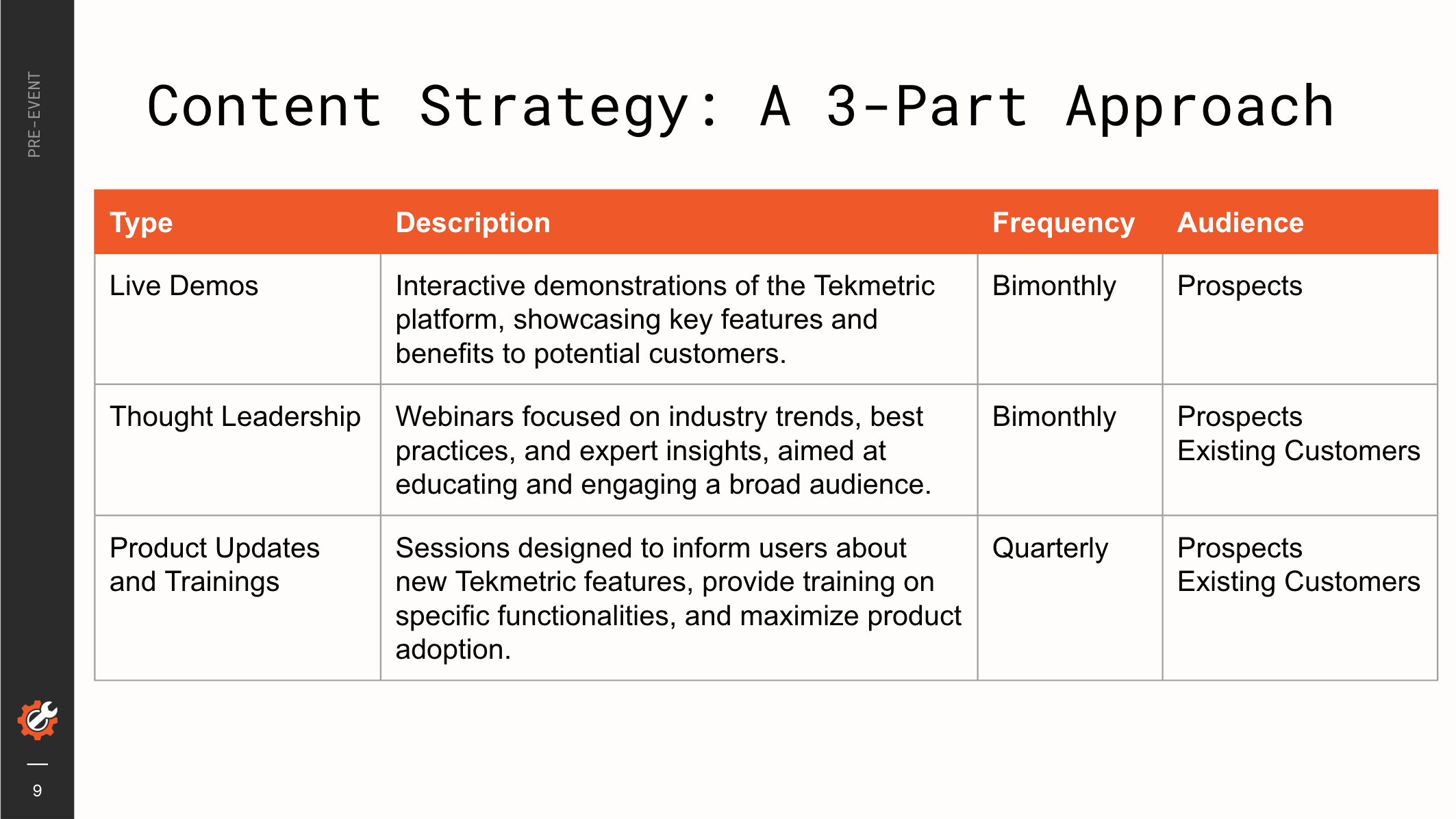
The structure allows the team to engage different audience segments, reinforce brand trust, and align content with where each account is in the buying or customer journey. It also ensures they never run out of meaningful webinar topics.
Step 3: Segmenting the Right Audience for Every Session
They segment audiences by whether they are a prospect or a customer, business type and size, and their current tech stack. These variables inform not just which sessions someone is invited to, but also how the messaging is framed in email promotions, landing pages, and follow-ups.
The result was increased attendance and engagement. Instead of blasting a list, the team delivers a more personal experience at scale—an essential factor in driving conversion.
Step 4: Promoting Across the Funnel and Beyond
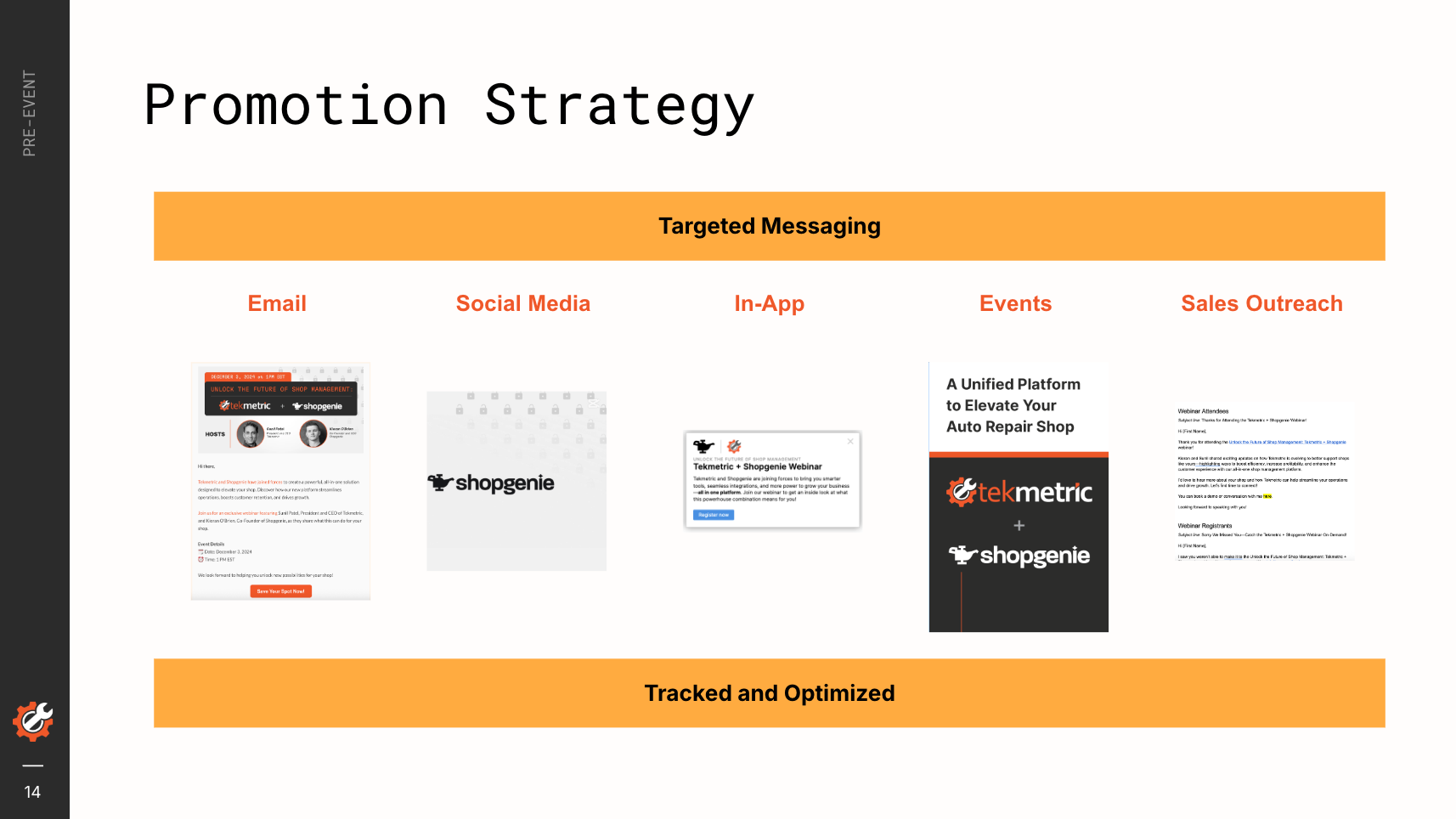
Email remains the highest-converting channel, powered by tested templates, reminder sequences, and triggered workflows. Social media amplifies the reach of each event, with both brand and speaker-led posts driving awareness and registration.
They also leverage their customer newsletter to highlight upcoming sessions and maintain retention momentum. Sales reps are looped in early with ready-to-share copy and talking points to personally invite key accounts. In some cases, the team explores co-marketing with partners and tested paid campaigns to extend reach.
Internal enablement is just as important. Cross-functional teams receive Slack alerts, calendar holds, and campaign toolkits to drive attendance. By treating webinar promotion like a product launch, they ensure everyone is bought in and aligned around success.
Step 5: Driving Real-Time Engagement That Converts
Presenters are encouraged to ditch the slide reading and lean into story-sharing, humor, and interactions. Live polls help shape the discussion in real time and give the team instant feedback on audience priorities. The chat and Q&A are lively, with hundreds of messages coming in during sessions.
The team also leans into giveaways and real-time shoutouts to create a sense of energy and reward participation. These tactics aren’t just ploys—they are a part of a broader effort to create a space where attendees feel like active participants, not passive viewers.
Step 6: Activating Post-Webinar and Measuring What Matters
Because every session is hosted through Sequel.io, webinars are instantly available on demand without manual work. The Sequel platform automatically publishes replays and tracks engagement across live and asynchronous views, giving Tekmetric additional ROI from every session. Performance metrics—like demos booked, influenced deals, engagement rates, and show rates—are reviewed after each session to guide future planning.
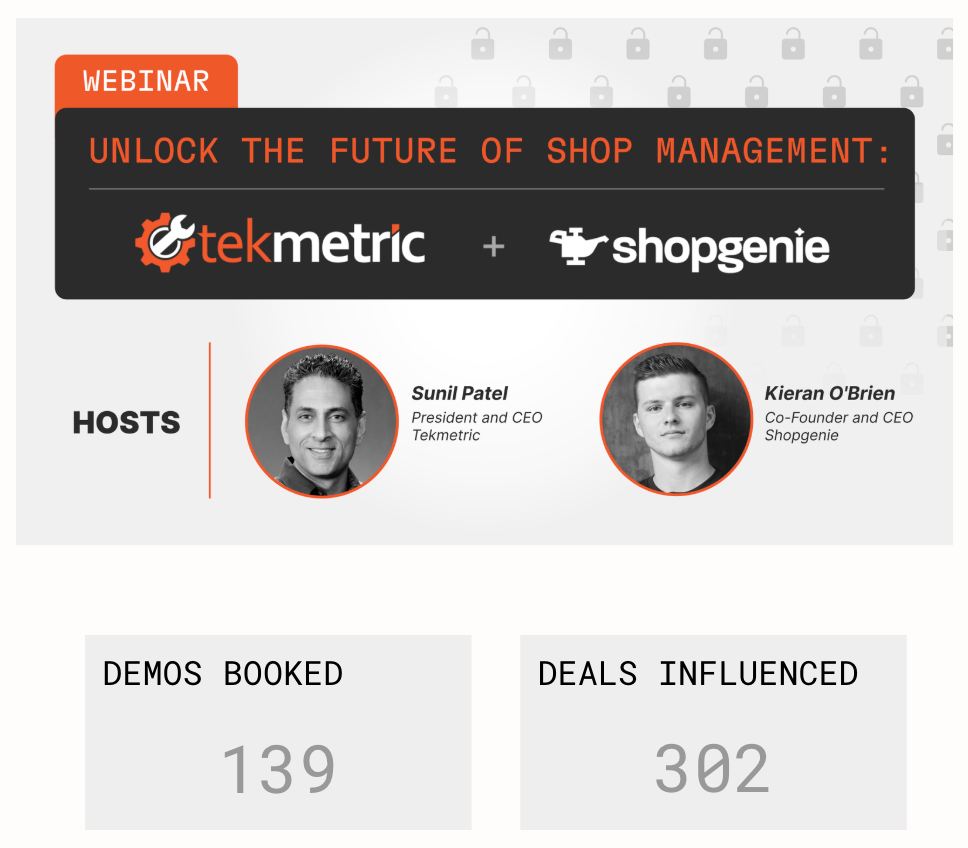
And the results? Tekmetric generated 139 booked demos, influenced 302 deals, and created an ongoing engagement engine that aligned with both Marketing and Sales goals within a single webinar.
Replicating Tekmetric’s Full-Funnel Webinar Playbook
Here’s what to focus on if you want to replicate their results:
Start by building a scalable technical foundation. Host webinars on your website, integrate your CRM and MAP, and use automation to streamline the attendee experience. From there, create a content structure that speaks to different funnel stages and segment your audience to ensure relevance.
Promote each session as if it were a product launch, with internal and external channels activated in sync. Deliver interactive, human-first experiences during the session. And most importantly, make sure every engagement gets activated post-event—through Sales outreach, content reuse, and follow-up strategy.
Want to turn your webinars into demo-generating machines like Tekmetric?
Let’s chat about how Sequel.io can help you build a full-funnel webinar engine—fully embedded on your website and integrated with your go-to-market motion.