How Info-Tech Built a Flagship Member Event Series to Drive Retention and Engagement
Running two to three events per week across three brands, four global offices, and audiences ranging from 50 to 1,800 people sounds like a logistics nightmare. For most marketing teams, the answer to that challenge would be to simplify: fewer events, fewer formats, more reuse.

Info-Tech Research Group took the opposite approach. Instead of scaling back, they rebuilt everything: their platform, their strategy, their workflows, and the entire attendee experience. The result is a webinar program that doesn't just reach members; it keeps them coming back. Top-engaged attendees have joined 15, even 18, events. The program drives roughly 500 registrations a week back to infotech.com. And a single CTA change sent MQL growth into the thousands of percentage points.
Jon Lowe, Webinar Program Manager at Info-Tech, walks through the exact playbook behind it.
The Foundation: Two Programs, One Philosophy
Info-Tech Research Group is one of the largest technology research and advisory firms in the world, serving IT leaders and their teams across North America, Europe, and APAC. Their marketing operation spans three distinct brands (Info-Tech, McLean & Co., and Software Reviews) and four global offices. Running events at that scale, with that much brand complexity, requires more than a good speaker lineup.
When Jon Lowe's team set out to rebuild their event program, they started with a clear architectural decision: not one event format, but two, each serving a different purpose.
The Weekly Webinar Series. Two to three events per week, running simulive (pre-recorded content transitioned to live) across all three brands and regions. The goals are straightforward: increase registration, attendance, and leads on a rolling basis. Speakers get a modern, intuitive interface. Admins get a streamlined build process. And members get a consistent, professionally produced experience every time.
But the real power of running an event series rather than one-off events is what happens to the audience over time. With a subscription page surfaced in the Resources tab of every event, members can opt in to the full program at any touchpoint. Sequel tracks engagement across sessions, so every replay view, resource download, and return visit compounds into a richer picture of member behavior. The audience doesn't reset after each event; it grows.
The All-Member Meeting. A monthly live production broadcast from Info-Tech's Toronto headquarters, this is their flagship member event. It's a studio-quality production featuring Info-Tech's best analysts discussing emerging IT research and trends, targeted to members but open to prospects. It's designed to feel like a premium event worth clearing your calendar for.
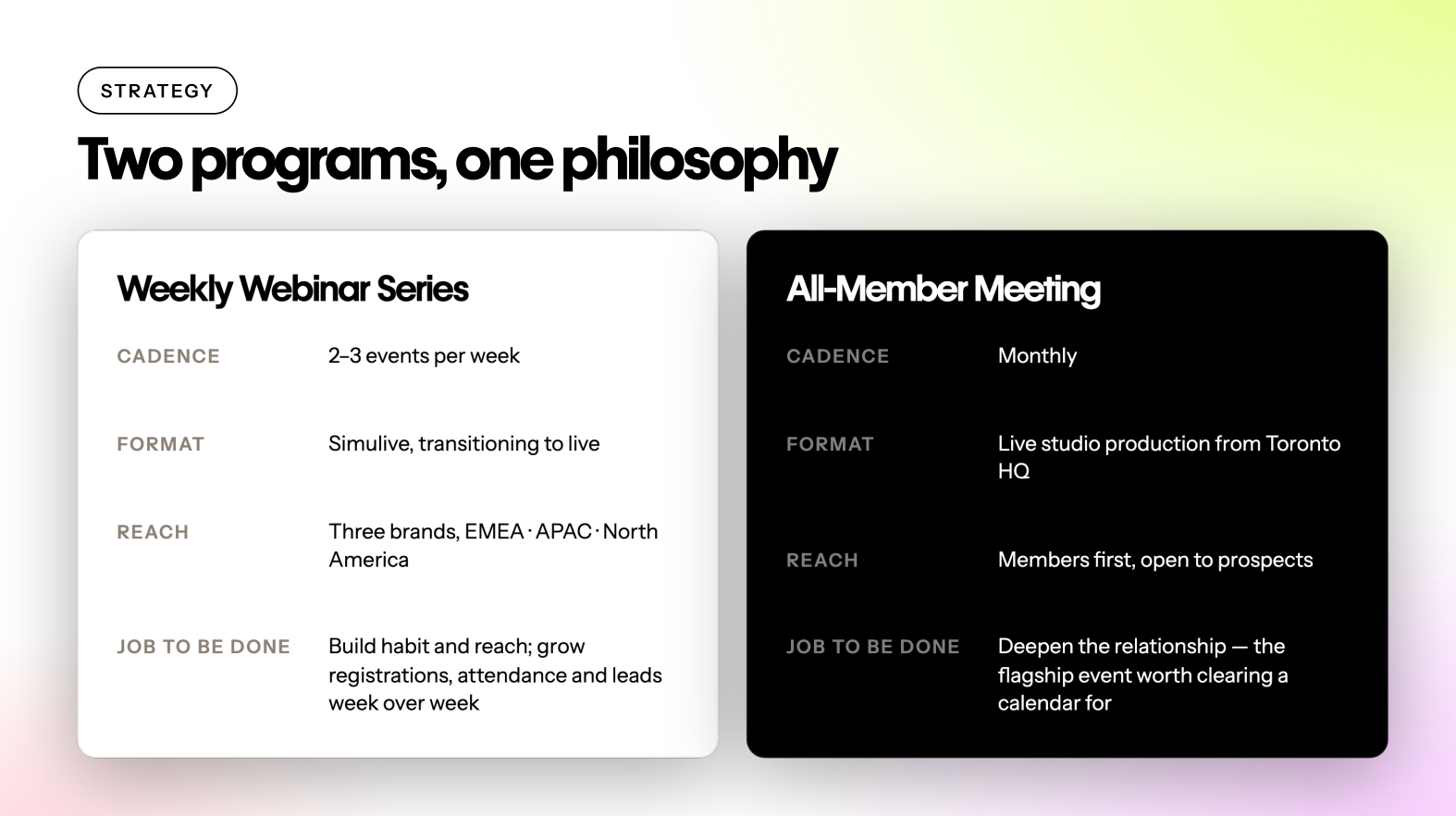
How to apply this: Before optimizing your event program, define what you're actually trying to accomplish with it. Info-Tech didn't build one program and try to make it serve every goal; they built two, each with its own audience, format, and success metrics. And they designed both as series, not one-offs, so the audience and the data could compound over time.
Leaving Behind a Platform That Was Holding Them Back
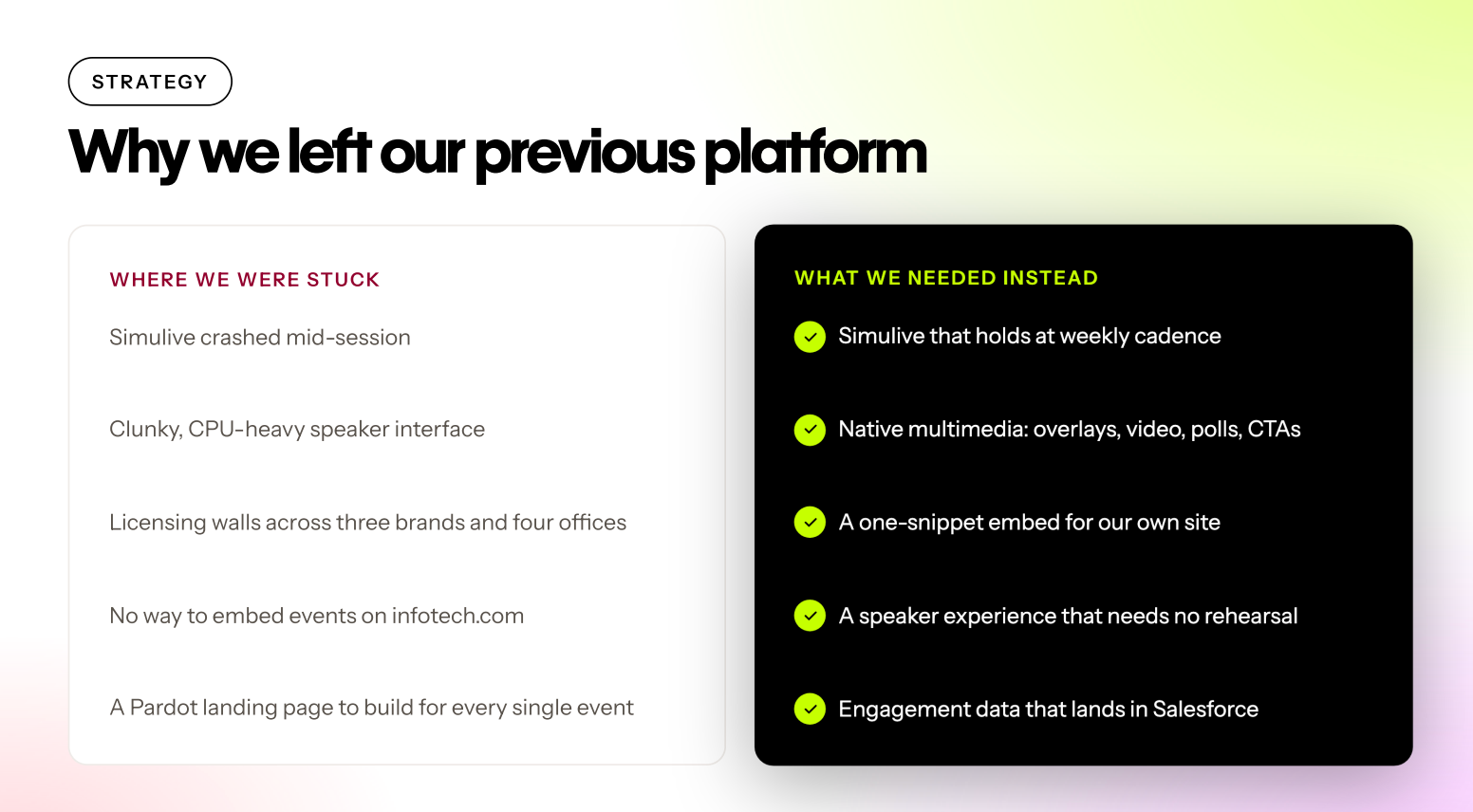
Before rebuilding, Info-Tech was running on a platform that had become a source of consistent friction. Simulive content would crash mid-session, a problem that was both embarrassing and operationally disruptive at the frequency Info-Tech runs events. The speaker interface was clunky enough that presenters needed hand-holding, pulling focus away from content. CPU load was a recurring problem. Licensing restrictions made it difficult to scale across three brands and multiple regions without hitting walls. And there was no way to embed events directly on infotech.com: every registration sent members to a third-party page, breaking the on-site experience and making the program's traffic contribution invisible.
Switching platforms wasn't just a technical decision. It was a strategic one. Info-Tech needed infrastructure that could actually support the program they wanted to build.
With Sequel, the difference was immediate and concrete.
- Simulive runs stably, which matters when you're publishing two to three events a week and a crash isn't a minor inconvenience but a program-level problem.
- The speaker interface is intuitive enough that presenters can focus on delivering content rather than managing the tool.
- Multimedia tools including overlays, multiple video inputs, polls, and in-session CTAs are all native, which is what made the All-Member Meeting's production format possible.
- Website embedding is built in, not a workaround: a single code snippet brings the full registration and attendance experience onto infotech.com.
- The Sequel Resources tab is persistent across every event in the series, which is how Info-Tech surfaces their subscription page, resource downloads, and CTAs to every attendee without rebuilding it each time.
- Engagement data flows directly into Salesforce, giving the team the reporting they needed to make the program's revenue contribution visible to leadership.
The platform didn't just remove friction. It raised the ceiling of what was actually achievable.
How to apply this: If your platform is forcing consistent workarounds, that's not a tool problem, it's a ceiling problem. Take stock of which capabilities you've stopped trying to use because the experience is too painful, and which programs you haven't built because the infrastructure couldn't support them. The right platform doesn't just fix what's broken; it opens up what wasn't possible before.
The Execution: Where the Strategy Became Results
The platform switch cleared the path. What Info-Tech did with it is where the real playbook lives. Over the months following the transition, the team ran four execution threads:
- Embedding events on infotech.com
- Redesigning their CTA strategy
- Closing the Salesforce loop
- Building the All-Member Meeting into a flagship production
Each produced measurable results. Together, they created a compounding system where every event makes the next one more valuable.
The Embedding Decision That Multiplied Traffic
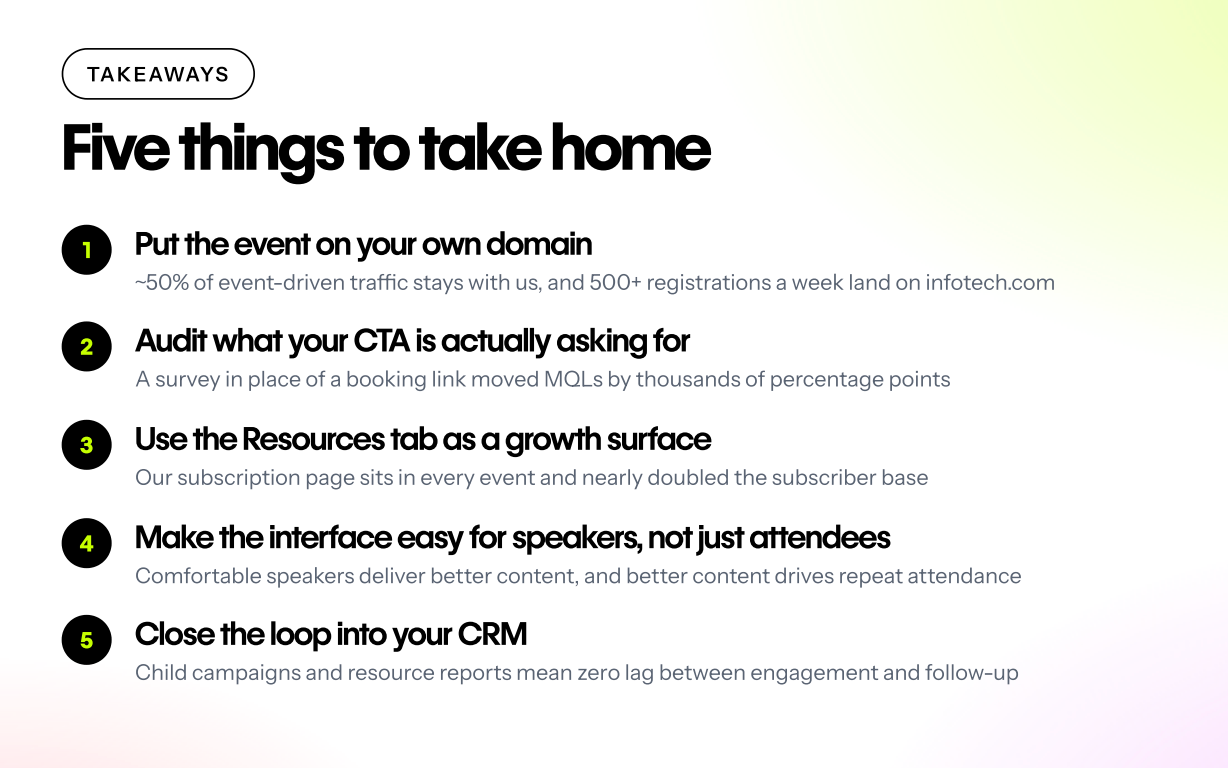
One of the most consequential moves Info-Tech made wasn't about content; it was about where their events lived. By embedding Sequel directly on infotech.com, they eliminated third-party landing pages entirely and brought the full registration and attendance experience onto their own site.
The impact was immediate. Instead of sending members off-domain to register, Info-Tech now drives ~500 registrations per week back to infotech.com. Around 50% of all event-driven traffic stays on their domain. Members who come to register are browsing research, exploring other resources, and engaging with content they might never have found otherwise. Those behaviors were invisible before the switch.
The benefits rippled beyond marketing. Building webinar registration directly on the website improved brand consistency, increased internal visibility for the program, and made its contribution to site traffic obvious and attributable. IT leadership could see the value in clear terms.
Embedding also streamlined the build process. Between EMEA, APAC, and North America, Info-Tech's team fields a high volume of webinar requests across all three brands. Replacing Pardot landing page builds with Sequel embeds reduced the admin work per event significantly, freeing the team to focus on what actually moves the needle.
How to apply this: Hosting your events on your own website isn't just a branding choice; it's a data and traffic decision. When attendees register and attend on your domain, every interaction is yours: first-party data, behavioral signals, and session time that compounds across every event in the series. The embed takes minutes to set up. The returns compound indefinitely.
The CTA Swap That Nobody Expected to Work This Well
For a long time, Info-Tech's events included a standard "Book a Meeting" CTA, a common ask that yielded common results. It wasn't broken, but it wasn't meaningfully moving pipeline.
Jon's team made a change that sounded counterintuitive: they replaced the direct booking CTA with a survey. Instead of asking members to immediately schedule time with a rep, they asked members what was most relevant to them, and let the responses do the work.
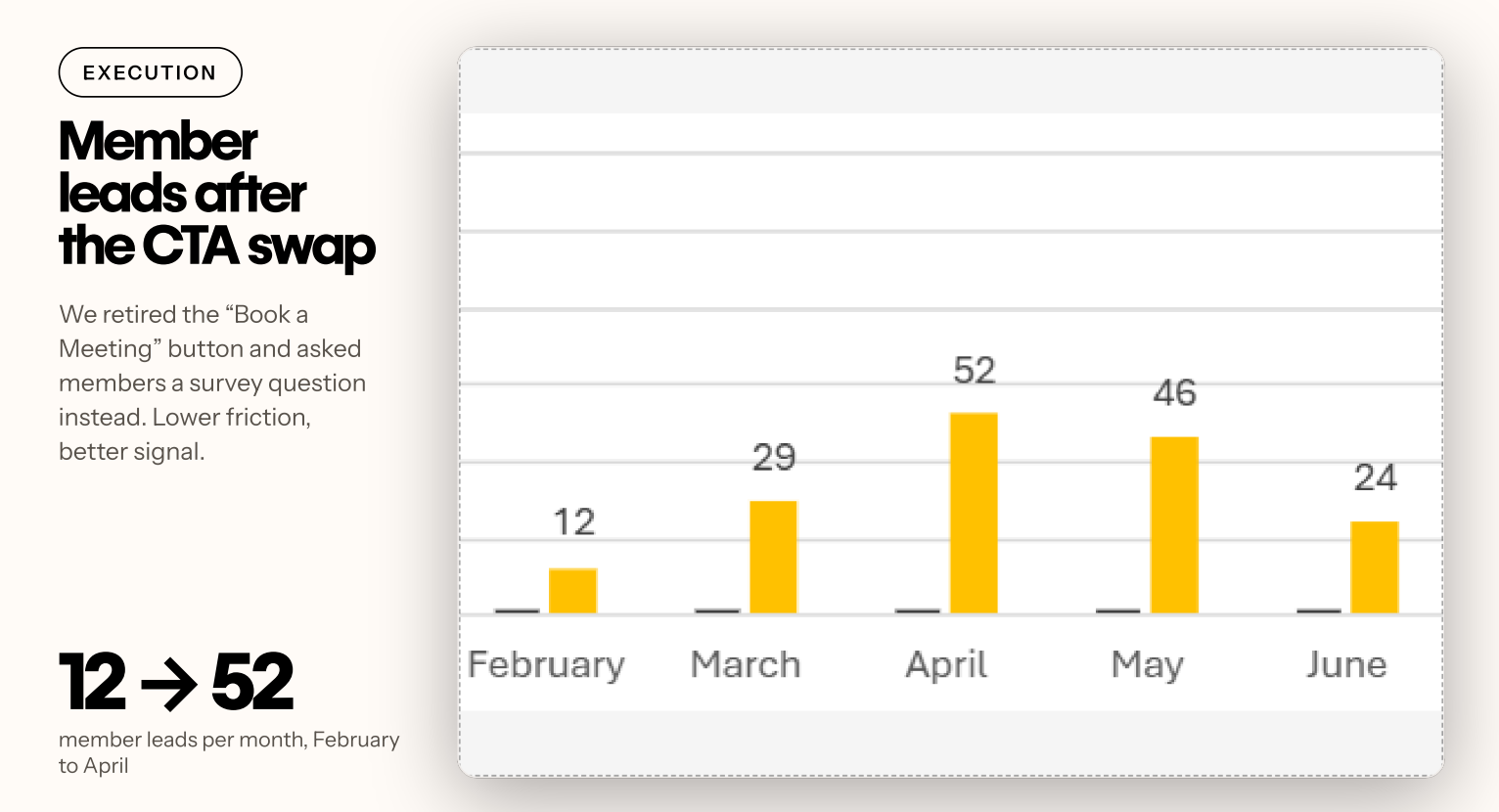
The results were dramatic. MQL growth following the survey CTA swap reached several thousand percentage points compared to the prior period. Not a modest improvement. A fundamental change in what the program was generating. Every positive survey response now automatically creates a child campaign in Salesforce and triggers a lead assignment to the appropriate rep. The data flows without manual intervention.
The team extended this logic to resource downloads, too. Sequel's reporting captures every download: which resource, which attendee, when. That data gets pulled into an internal sales calendar via SharePoint and Pardot, giving reps a running view of what members are engaging with. On a single standout day, 208 resources were downloaded and fully surfaced to the sales team.
How to apply this: Info-Tech's survey swap is a reminder to audit what your current CTA is actually asking of your audience, and whether the friction is proportional to where they are in their journey. The lesson isn't that a survey is the right answer for every program; what works for a membership-based research firm may be completely different from what works for a SaaS company or a professional services team. The point is to examine your CTA honestly, test a lower-friction alternative if the current one isn't converting, and connect whatever you test directly to your CRM so the data can tell you whether it's working.
Building the Salesforce Loop
Intent data is only valuable if it reaches the right people at the right time. Info-Tech built a workflow that makes sure it does.
Every positive survey response triggers a child campaign in Salesforce, automatically routing the lead to the appropriate rep based on the member's profile. Resource download data from Sequel's reporting is added to an internal sales calendar, giving reps a live view of what content members are engaging with and when. No manual export or lag between the event and the rep's awareness.
This turns the webinar program into a persistent sales signal rather than a one-off event that lives and dies in a marketing report. Reps don't need to ask what happened on last Tuesday's webinar. They can see who attended, what they downloaded, and how they responded to the survey, all without leaving Salesforce.
For a subscription-based business like Info-Tech's, this matters enormously. Member retention isn't built in a single interaction; it's built through consistent, valuable engagement over time. The Salesforce loop ensures that every high-engagement interaction has a clear path to a meaningful follow-up.
How to apply this: Map out exactly which signals from your events are meaningful to sales: registrations, survey responses, resource downloads, repeat attendance. Then build the automation that surfaces those signals without manual work. The goal is zero lag between a member engaging and a rep knowing about it. Start with one integration, prove the value, then add the next.
The All-Member Meeting: Flagship Production at Scale
Two to three times a week might be the rhythm of the Weekly Webinar Series, but once a month is what members mark their calendars for: the All-Member Meeting.
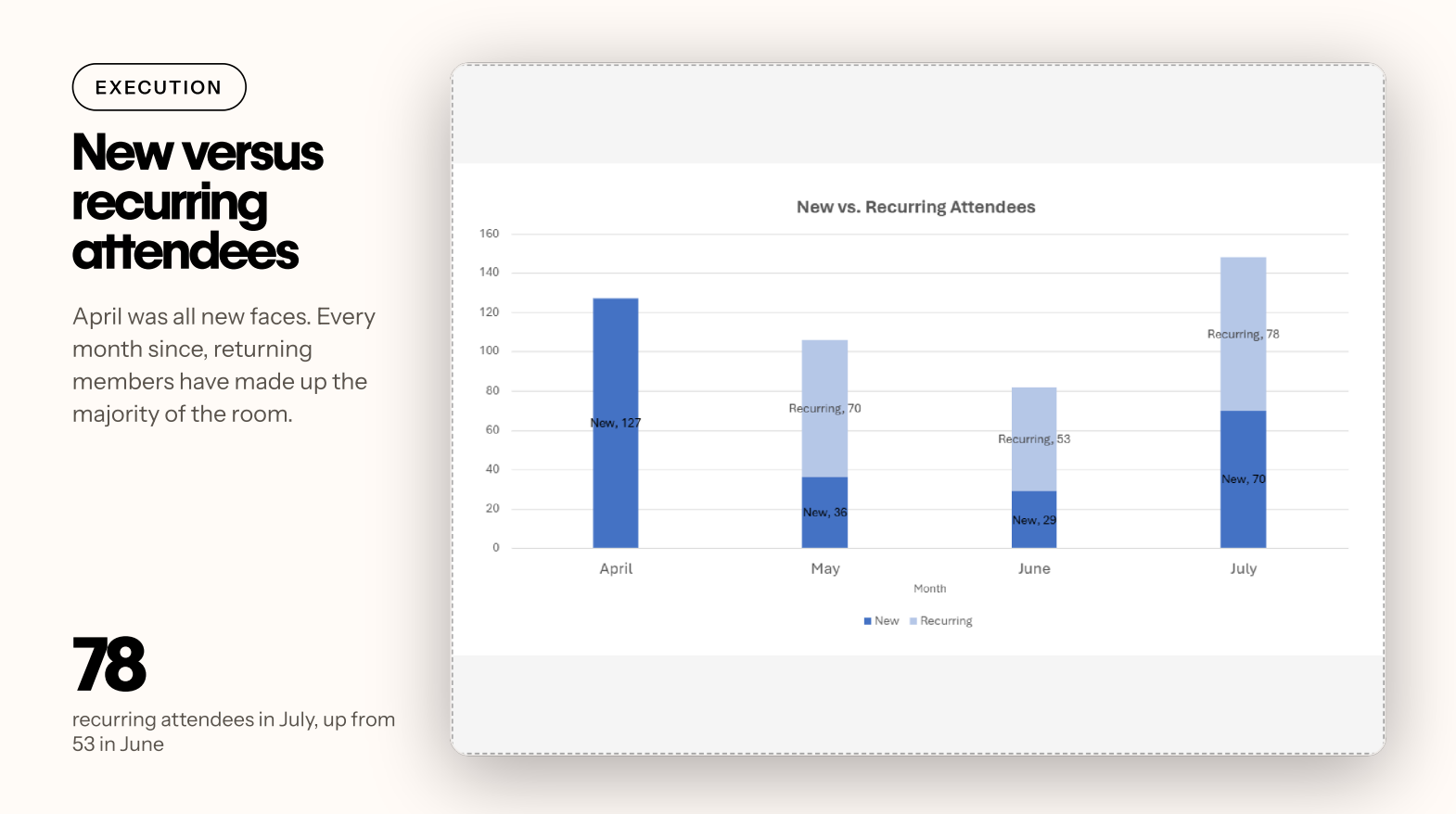
Broadcast live from Info-Tech's Toronto headquarters, the All-Member Meeting is a different tier of production entirely. It features Info-Tech's top analysts presenting on emerging IT research and trends, with Sequel's multimedia tools powering the broadcast: overlays, multiple video inputs, real-time engagement features, and a visual polish that signals this is something worth paying attention to. It's the kind of event the team's previous platform couldn't have supported.
The program is targeted to members but open to prospects, meaning it functions as both a retention driver and a demand generation touchpoint in a single monthly event. The results reflect that dual purpose: top engaged attendees have joined 15, 18, and more events in a given period. Not because they're obligated to attend, but because the program has earned that loyalty.
Subscriber growth is another proof point. After adding a webinar subscription page to the Resources tab of every event, Info-Tech nearly doubled their subscriber base. The page is visible to every attendee, making it frictionless to opt into future events without a separate sign-up flow, turning every live attendee into a potential subscriber and every event in the series into a subscriber acquisition moment.
How to apply this: If you have the capacity for a higher-production flagship event, treat it as a separate program with its own goals and its own definition of success. The weekly cadence builds habit and reach; the flagship deepens the relationship. Running both, and tying them together through a shared subscription flow, gives you coverage across the full member lifecycle: acquisition, engagement, and retention.
The Results
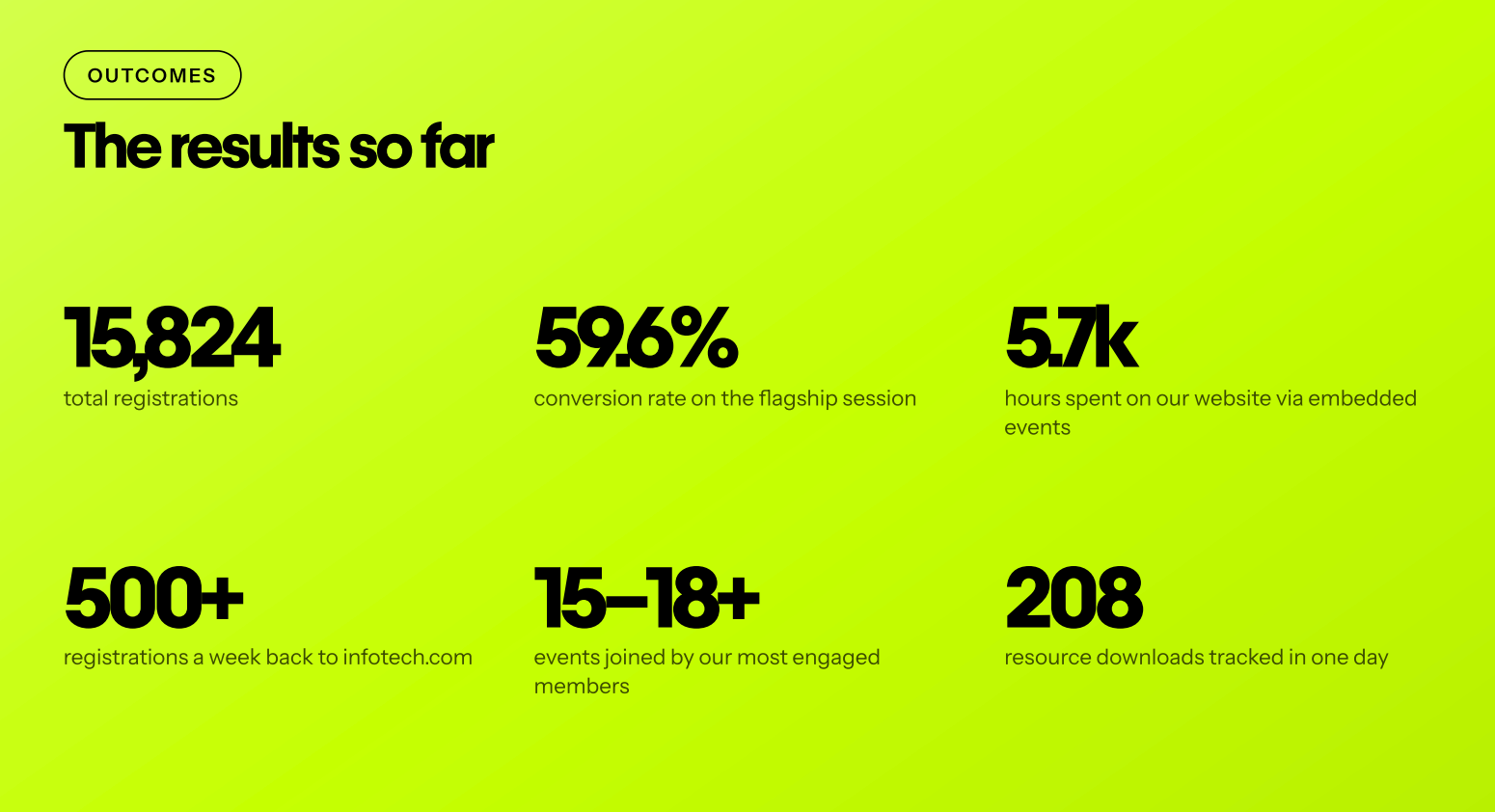
Since rebuilding their event program with Sequel, Info-Tech Research Group has delivered:
- 15,824 total registrations across the program
- 59.6% conversion rate on flagship sessions
- 5.7k hours spent on the website via embedded events
- ~500 registrations per week flowing back to infotech.com
- ~50% of all event-driven traffic staying on-domain
- Several thousand percentage points of MQL growth following the survey CTA swap
- 208 resource downloads tracked in a single day, surfaced automatically to sales
- Top members joining 15–18+ events across the series
- Subscriber base nearly doubled after adding the subscription page to the Resources tab
The program started 2025 behind the prior year's numbers. Within months, it had not only caught up. It surpassed them.
Replicating Info-Tech's Retention Playbook
The through-line in everything Info-Tech built is that they treated every element of the program (the platform, the CTA, the CRM workflow, the production format) as something worth getting exactly right. Not for the sake of perfection, but because each piece multiplied the value of the others.
Embedding events on their own site made traffic attribution visible. Visible traffic attribution made it easier to build the internal case for investing in the Salesforce integration. The Salesforce integration made the survey CTA worth testing properly. The survey CTA results made the program's revenue contribution undeniable. And running it all as a series rather than a collection of one-off events meant every new attendee became a potential long-term subscriber.
If you're trying to replicate what Info-Tech built, start with the foundation: get your events living on your own website, get your engagement data flowing into your CRM, and get your team aligned on what a good outcome from an event series actually looks like. The rest builds from there.
Ready to build a retention-focused event series like Info-Tech's? Book a demo with the Sequel team.