Most search results for "B2B virtual events" give you a directory of upcoming conferences. But if you're here, you're looking for something more. You need to know how to run B2B virtual events that capture buying signals and feed your pipeline.
The data backs the format.
Hosting sessions natively on your website helps 90% of marketers report increased attendance, with significant lifts in brand awareness and lead generation quality. But there's a massive execution gap between broadcasting a slide deck and actually driving revenue. And the gap is architectural.
If you send prospects to a third-party application, you break attribution. You leak first-party data. You lose control of the buying journey. The prospects you worked hardest to attract end up on someone else's domain, generating engagement data you'll never see.
This guide covers how to run B2B virtual events that keep traffic on your website, pipe behavioral data directly into your CRM, and turn a single session into months of content.
What Makes B2B Virtual Events Different
B2B virtual events that generate pipeline operate differently. They function as high-signal moments within your broader website strategy, making your site adaptive and revenue-aware based on engagement data.
The goal is capturing first-party data that translates directly into sales conversations. Understanding virtual event best practices means shifting from a one-way presentation to a two-way engagement model. You need a branded environment with frictionless registration, interactive elements that compel the buying committee to reveal their intent, and a website that acts as the venue rather than a static brochure.
A successful B2B virtual event captures how people engage during the session and what they do on your website before and after. That creates a single behavioral record per person and per account.
A third-party platform just gives you a headcount.
The Tech Stack Decision That Changes Everything
Stop Sending Prospects to Someone Else's Website
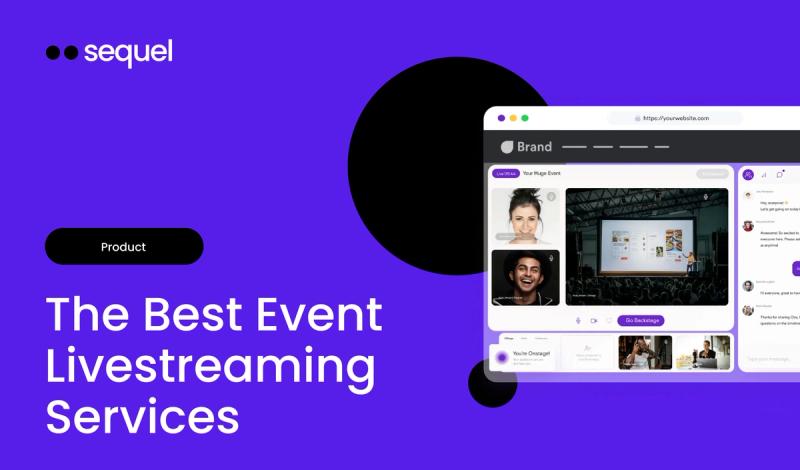
The modern standard for B2B virtual events: embed the entire experience directly on your own website.
WordPress, Webflow, custom CMS. Doesn't matter.
When the event lives on your domain, every attendee becomes a measurable website visitor. They're surrounded by your product pages, pricing, and conversion paths. Your analytics track the full journey. Your retargeting pixels fire. The event contributes to your organic traffic and SEO instead of building someone else's domain authority.
That architectural difference is what separates B2B virtual events that generate pipeline from B2B virtual events that generate CSV files.
Fill the Room With the Right Accounts
Capturing that value requires a rigorous approach to promoting your events.
- Map topics to specific pain points
- Use partner networks for co-marketing
- Build targeted email sequences
- Have your sales team send personalized invitations to target accounts.
Every registration form maps directly to your CRM. No manual CSV uploads. No brittle integrations. Just clean data from the moment someone registers.
Engineering Engagement That Produces Usable Data
Specific tactical choices increase engagement in B2B virtual events. Every interaction builds a behavioral profile that sales can act on.
The signals to watch for:
- Did they attend live or on-demand?
- How long did they watch?
- Did they ask a question about implementation?
- Did they click through to request a demo afterward?
Mutiny demonstrates what this looks like at scale. They ran a multi-episode, gamified series directly on their site and generated 2,000 hours of engagement and a 42x ROI. In short, they built an interactive environment that captured deep audience signals and turned them into pipeline.
Measuring What B2B Virtual Events Actually Produce
To accurately measure ROI, link all engagement points together. Pre-event website page views. In-event actions like poll responses and questions asked. Post-event behavior like pricing page visits and demo requests. All connected under a single user record.
Remember, speed matters more than volume. When engagement data syncs to Salesforce, HubSpot, or Marketo in real time, sales responds while intent is hot.
Waiting 24 hours to export a CSV means following up after the buying signal has cooled.
6sense proved this at scale. They synced attendee data to personalize follow-ups and influenced millions in pipeline from 8,600+ registrations. They scored leads based on actual watch time and question participation. Their SDRs knew exactly which accounts were showing broad interest and prioritized outreach accordingly.
That level of precision doesn't come from a registration list. It comes from first-party behavioral data captured on an owned domain.
Making B2B Virtual Events Valuable for Attendees
If all they get is a passive slide presentation, they won't come back.
Prompt attendees to engage in chat, answer polls, and download shared resources. Because B2B virtual events live natively on your website, attendees benefit from an integrated environment. The experience should feel like a natural extension of your site, not a detour.
Encourage attendees to follow up with speakers on LinkedIn and connect with peers from breakout rooms. Position the event as a practical tool for their daily challenges, not just a marketing exercise.
The hosts who maximize webinar conversions treat the attendee's experience as seriously as the data capture. Both sides of the equation have to work.
Where B2B Virtual Events Are Heading
1. Shorter and sharper: According to Forrester, 43% of marketers plan to run more sub-60-minute, single-session events. Punchy, highly specific sessions are replacing generic 90-minute overviews. Buyer patience for bloated presentations is gone.
3. Demand is growing, tolerance for mediocrity isn't: Industry benchmark data shows 53% of attendees plan to attend more webinars in 2026, and 61% of organizers report increased attendance year over year. The audience exists. The bar for quality is just higher than it used to be.
3. AI turns one session into a content engine: The most significant shift is what happens after the broadcast. AI now summarizes and repurposes B2B virtual event content instantly. A single 45-minute session feeds a month of blog posts, social clips, and email content. Modern platforms generate transcripts, edited summaries, and navigable on-demand chapters automatically.
The event is only the starting point for a library of derivative content that drives organic traffic for months.
Building a B2B Virtual Event Strategy That Compounds
Audit your tech stack. Where does your audience actually go during the event? If they leave your website at any point, you're leaking traffic and breaking attribution. Bring registration and viewing back to your owned domain.
Connect event data to your CRM. Sync behavioral signals in real time so sales gets context, not just contact information. Lead scoring should reflect what happened during the session, not just whether someone registered.
Build the repurposing workflow before you go live. Know what blog posts, clips, and social assets you'll extract from the recording. Use AI tools so the content engine starts producing the same week. Every piece lives on your domain and builds organic authority.
Treat each event as one node in a series. B2B virtual events compound when they're connected. A recurring series builds an audience that returns. An on-demand library captures leads indefinitely. The promotional effort for event five is easier than event one because the audience already exists.
The companies capturing the deepest pipeline signals from B2B virtual events aren't running more events. They're running them on better infrastructure, measuring the right things, and extracting more value from every session.