

Most webinar programs are still judged by the same familiar metrics: registrations, attendance rates, and maybe engagement during the session. Those numbers can look strong on a dashboard, but they rarely answer the question that matters most to the business.
Did anything actually change?
For Alex Blanchette, Integrated Marketing Lead at Sentry, that question became the driving force behind a complete rethink of their webinar strategy. Instead of optimizing for more signups or better attendance, she focused on what happens after someone attends. The goal was not to generate interest, but to drive meaningful action inside the product.
That shift led to a fundamentally different approach — one that treats webinars not as isolated events, but as part of a broader system designed to influence adoption and expansion.
Today, that system is producing measurable impact:
- Sentry’s demo program engages approximately 10% of their sales-led pipeline
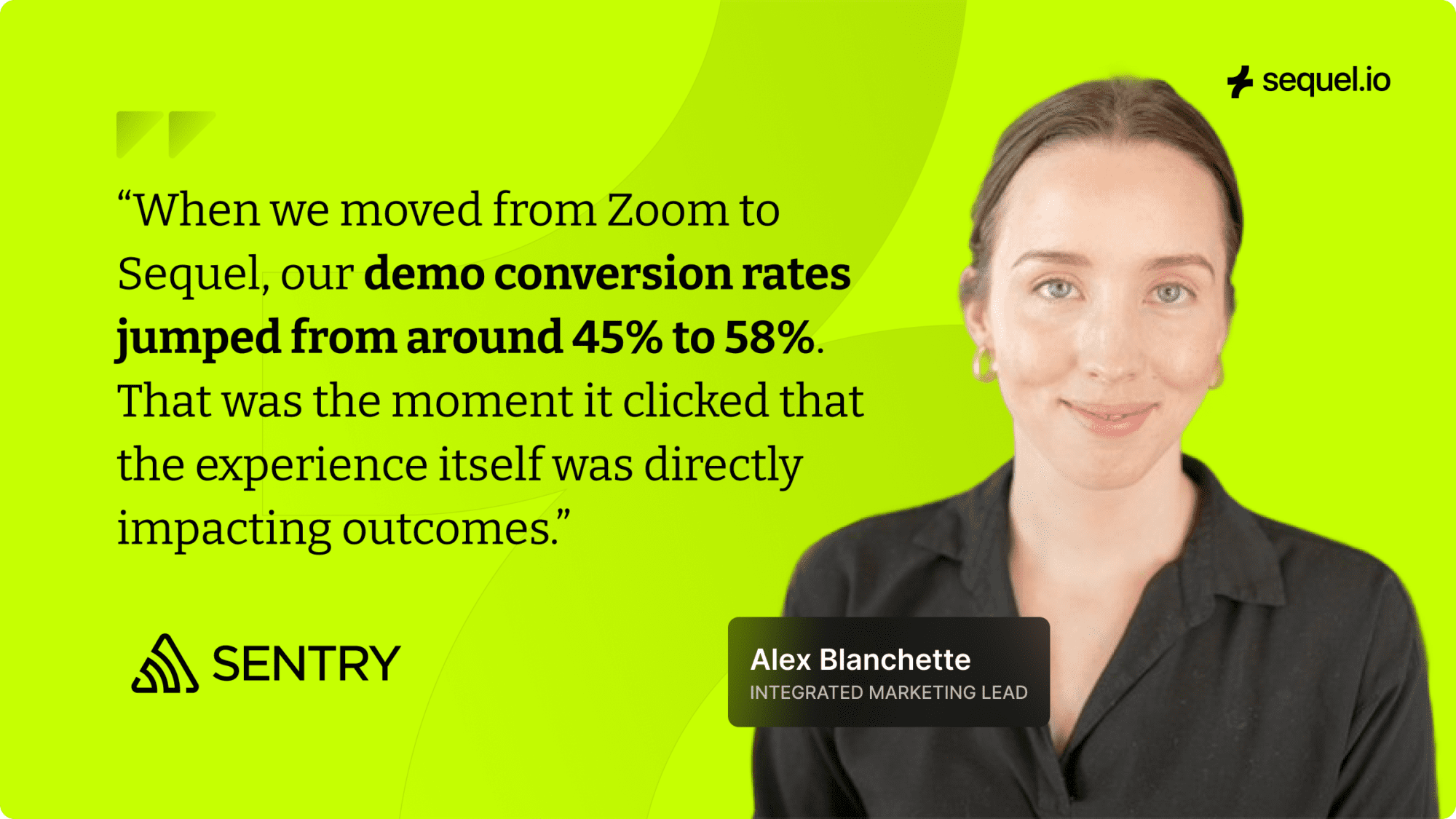
- Conversion rates have increased to 58% (up from around 45% with Zoom)
- Their workshop strategy is directly influencing expansion ARR across existing accounts.
This is not a story about running better webinars. It is a story about turning webinars into an expansion engine. One that drives product adoption, increases usage, and creates measurable growth across existing accounts.
Sentry’s Strategy: From Events to a Continuous System
The turning point in Sentry’s approach came when they stopped treating webinars as one-off campaigns and started treating them as part of a continuous user journey.
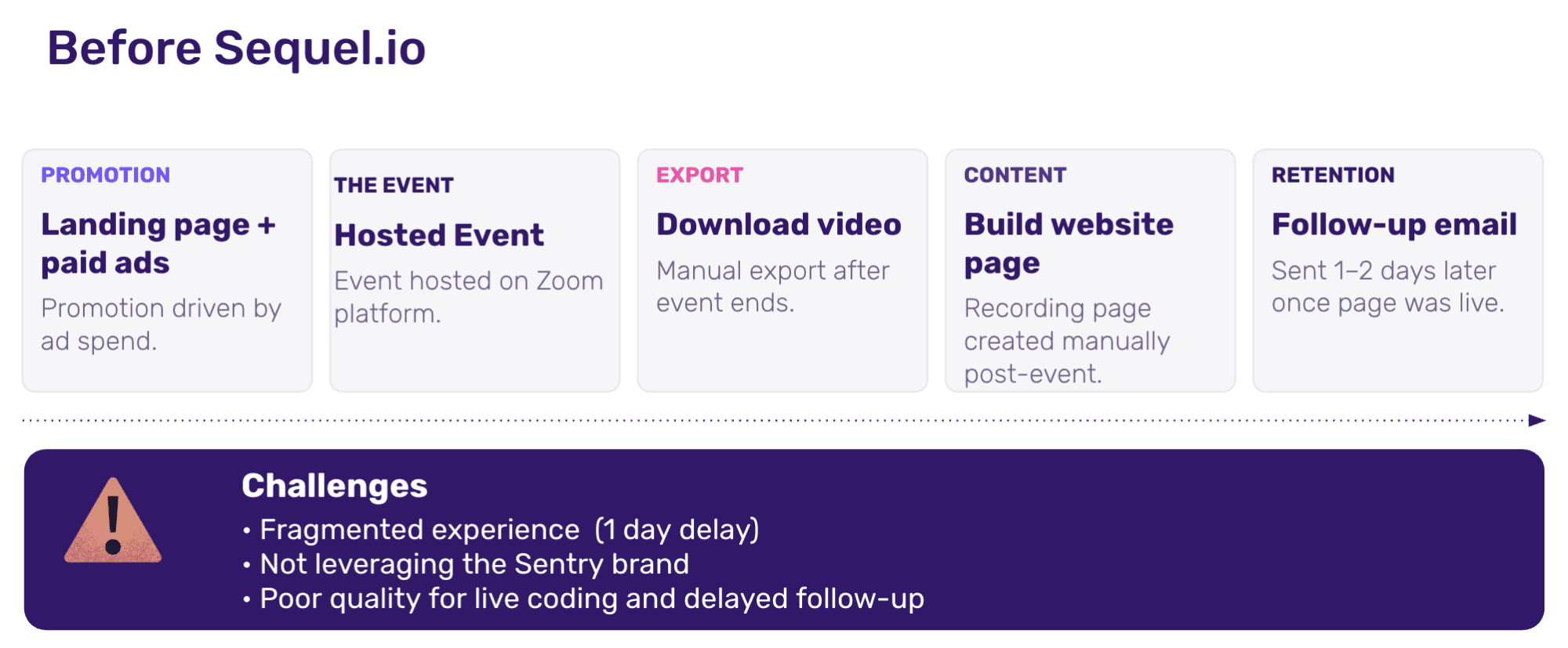
Previously, the experience followed a familiar pattern. A user would register, get a registration email with the session link, attend a live session hosted on Zoom, and receive a follow-up email with the recording the next day or so. This flow created a disconnected experience that did not feel aligned with Sentry’s brand or product. More importantly, it did not guide users toward any meaningful next step.
The new strategy was built around a simple but powerful idea: every session should move a user forward.
To support this, Alex and her team designed a layered program that aligns with how users actually engage over time.
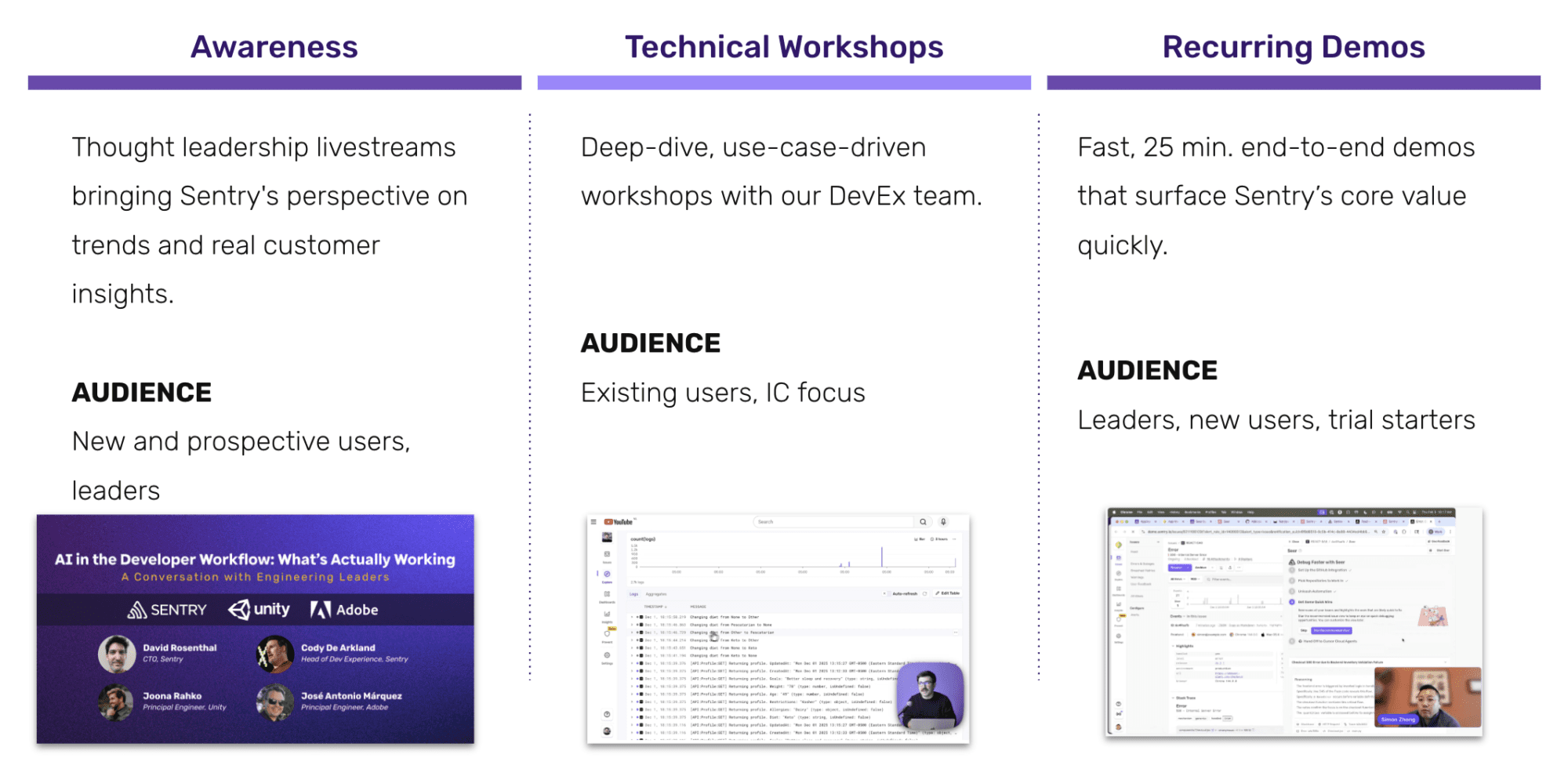
At the top, awareness-focused livestreams introduce ideas and build credibility within the developer community. These sessions are distributed across channels where developers already spend time, making them more accessible and less dependent on traditional registration flows.
From there, the program moves into technical workshops, which serve as the core driver of adoption. These sessions are built around real use cases and are designed to be hands-on, allowing participants to engage directly with the product. Instead of explaining what Sentry can do, the workshops demonstrate how to solve specific problems using the product in real scenarios.
Alongside workshops, the team runs a recurring demo program that focuses on quickly surfacing value for new users and decision-makers. Unlike traditional webinars, these demos are not one-time events. They run continuously, allowing the program to compound its impact over time.
What ties all of these elements together is a shared focus on progression. Each format serves a purpose, but none of them exist in isolation. Instead, they are connected through a system designed to guide users from awareness to adoption and ultimately to expansion.
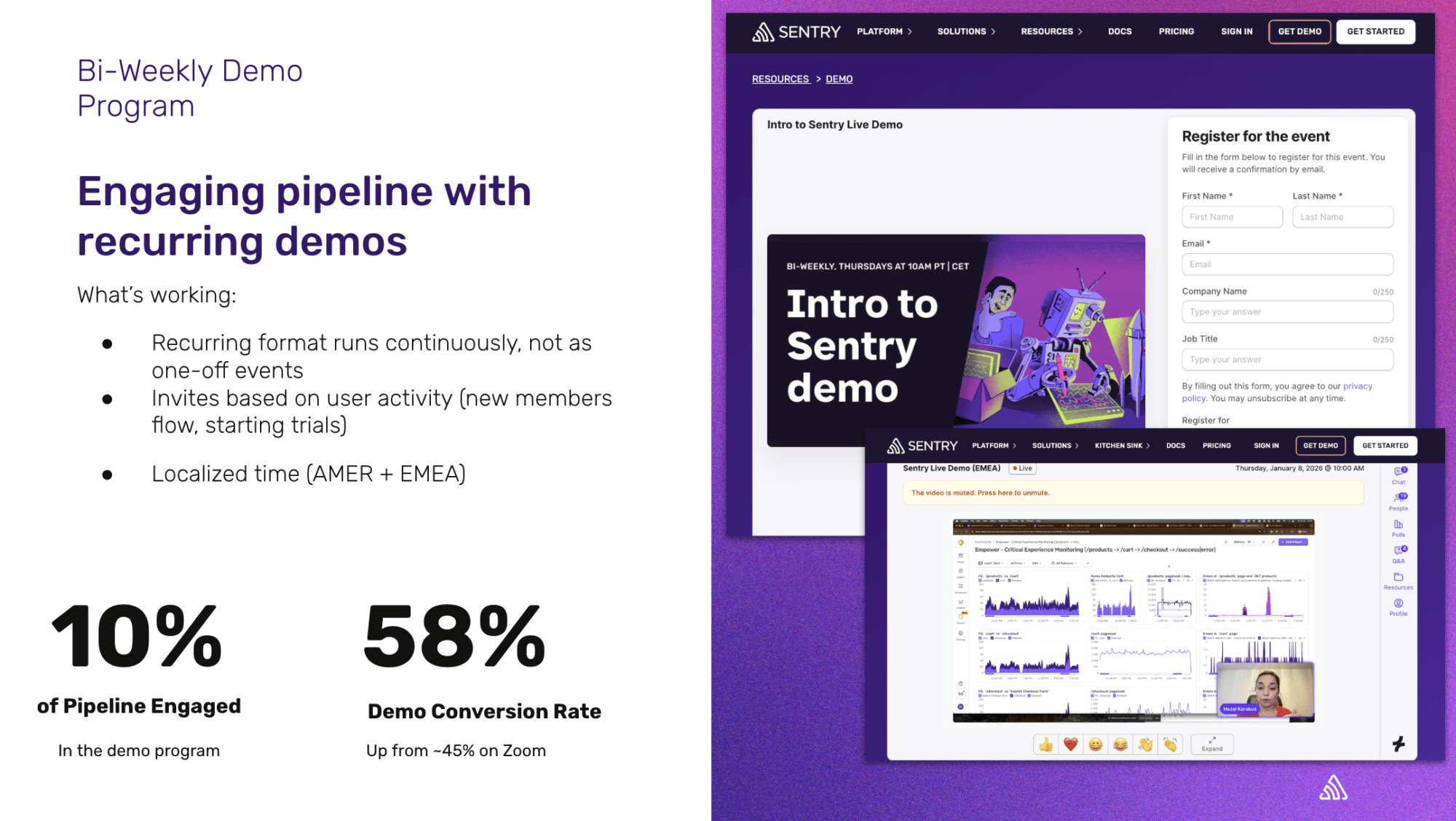
While the structure may look like a typical funnel on the surface, each layer is intentionally designed to support expansion. Awareness builds trust with developers, workshops drive hands-on product adoption at the individual contributor level, and the demo program helps align broader teams and decision-makers. Together, they create a system where growth does not depend on net-new acquisition alone, but on increasing the value of existing users over time.
Building a Seamless, Trust-Driven Experience
Before implementing Sequel, Sentry’s webinar experience followed a much more traditional and fragmented model. The team would promote an event and drive registrations through a landing page, but the actual experience took place inside Zoom’s desktop application. This meant users were required to download an application and leave Sentry’s environment entirely, creating a disconnect between the brand, the content, and the product itself.
The challenges extended beyond the live session. After each event, the process became manual and delayed. Recordings had to be exported, uploaded, and embedded onto a separate webpage, which often meant that follow-up emails were not sent until one or two days later. By that point, the window for immediate engagement had already passed. For a team focused on driving action, not just attendance, this created a significant gap.
There were also limitations in quality and control. For technical audiences, where clarity and precision matter, inconsistent resolution and a lack of ownership over the experience made it difficult to meet the bar Sentry had set for itself.
One of the most significant changes came from moving away from third-party webinar platforms toward a more integrated, on-site experience. Instead of sending users to an external tool, Sentry rebuilt the entire journey within their own environment using Sequel. Registration, live events, and on-demand content now all live directly on their website, creating a seamless experience that feels like a natural extension of the product and brand.
This shift did more than improve the user experience — it fundamentally changed how users engaged. By removing friction, eliminating tool-switching, and making content immediately accessible, the team created a more intuitive path from participation to action.
Owning the experience also allowed Sentry to rethink how they approached distribution and reach. Events are now simultaneously streamed across multiple platforms, including YouTube, Twitch, X, and partner channels, while still anchoring the core experience on their own site. This allows them to meet developers where they are without losing control of the journey.
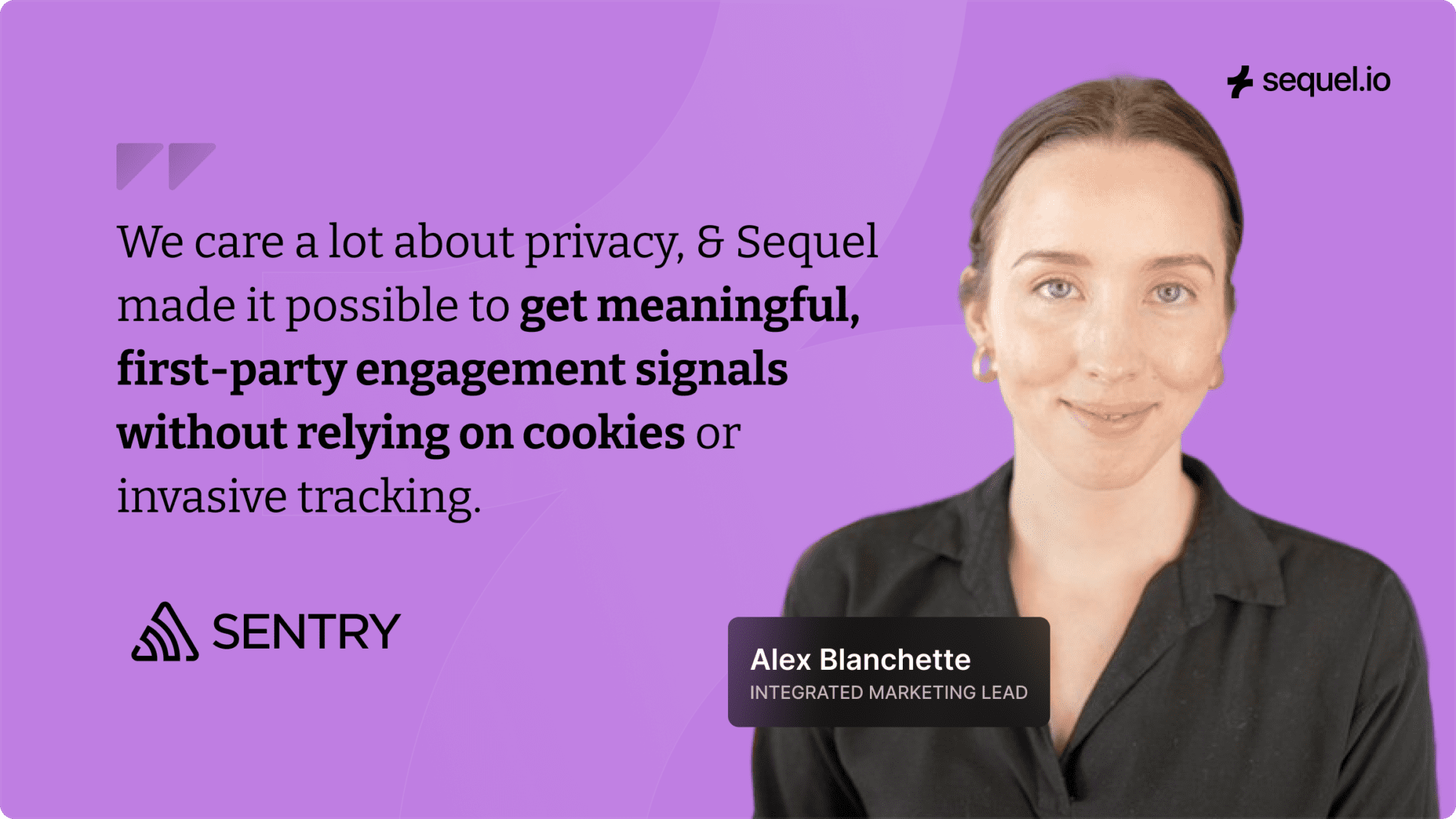
Just as importantly, this evolution strengthened how the team approaches data and trust. Rather than relying on third-party cookies or passive tracking, Sentry focuses on first-party engagement signals that come directly from user interaction. This approach aligns closely with developer expectations, where privacy and transparency are critical to building long-term trust.
With everything centralized, the team is also able to connect event data with broader performance insights. Engagement from sessions can be combined with other signals, such as content interaction and product usage, to create a more complete picture of how users are progressing through the product and where opportunities for expansion exist.
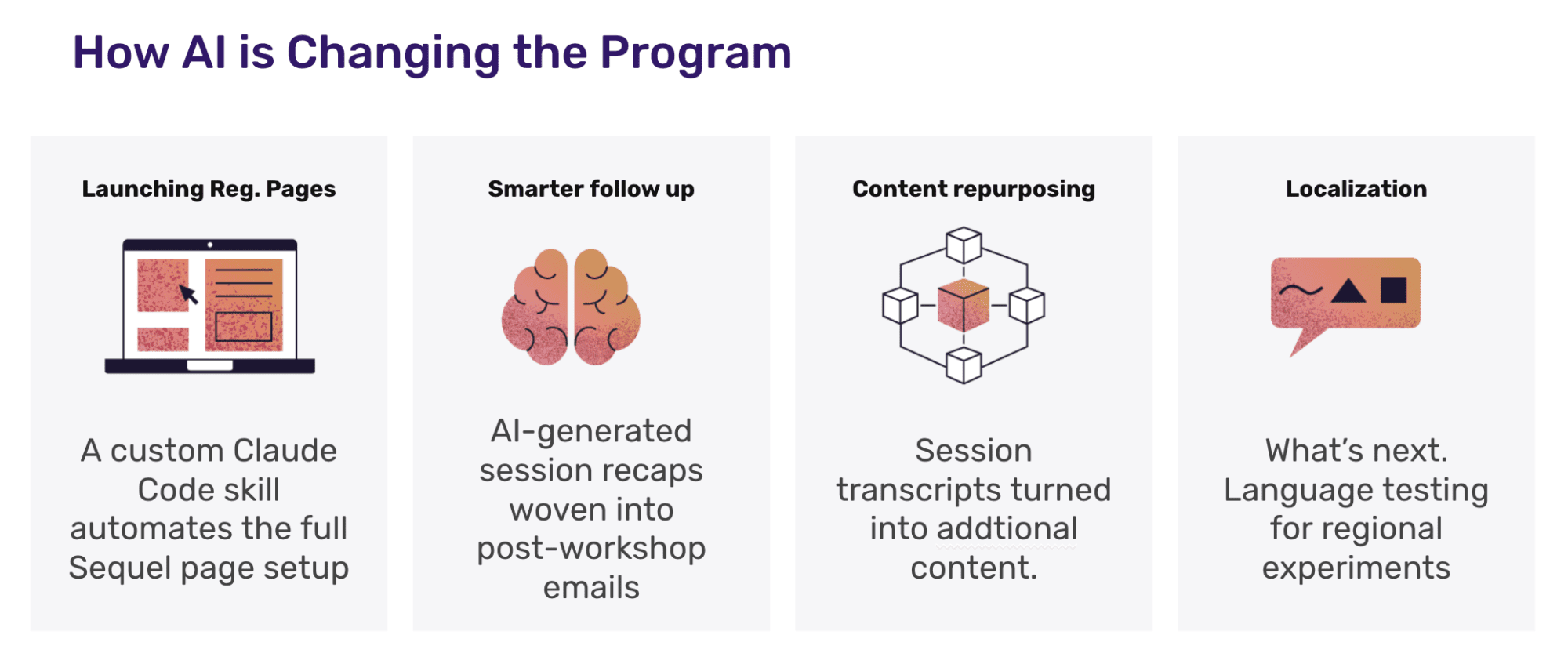
Finally, AI plays an important role in making the system scalable. Tasks that once required significant manual effort, such as building event pages, generating follow-up content, or repurposing sessions into additional assets, are now streamlined through automation. This allows the team to move faster and focus more on strategy, while maintaining a consistent and high-quality experience.
What started as a change in tooling ultimately became a foundational shift in how the program operates — transforming webinars from a disconnected workflow into a fully integrated growth engine.
The Playbook: How Sentry Drives Adoption and Expansion
What makes Sentry’s approach effective is not any single tactic, but how each part of the system is designed to reinforce the next. At the center of this playbook are a few key practices that consistently drive results.
One of the most important, and often overlooked, elements of Sentry’s program is how intentionally it is targeted. Not every workshop is designed for every user, and that specificity is what makes the content resonate.
The team uses a combination of signals to determine who should be invited to each session. Product usage data helps identify gaps in adoption, allowing them to target users who would benefit most from a specific workflow or feature. They also segment by role, recognizing that individual contributors, technical leads, and decision-makers engage with content differently and require different levels of depth.
For example, a hands-on workshop might be designed for developers actively using the product but not yet leveraging a key feature, while a demo session may be better suited for teams evaluating broader implementation. This level of targeting ensures that every session feels relevant, which is critical when working with technical audiences who are quick to disengage if content does not immediately apply to their needs.
The first is a strong emphasis on real use cases. Instead of organizing sessions around features or product updates, each workshop is built around a specific problem that developers are trying to solve. This ensures that the content feels immediately relevant and actionable, which is critical for maintaining engagement.
The second is the shift from passive to interactive experiences. Rather than presenting information, workshops are designed to involve the audience directly. Participants are encouraged to follow along, explore the product, and apply what they are learning in real time. This level of interaction makes the experience more memorable and increases the likelihood that users will continue engaging after the session.
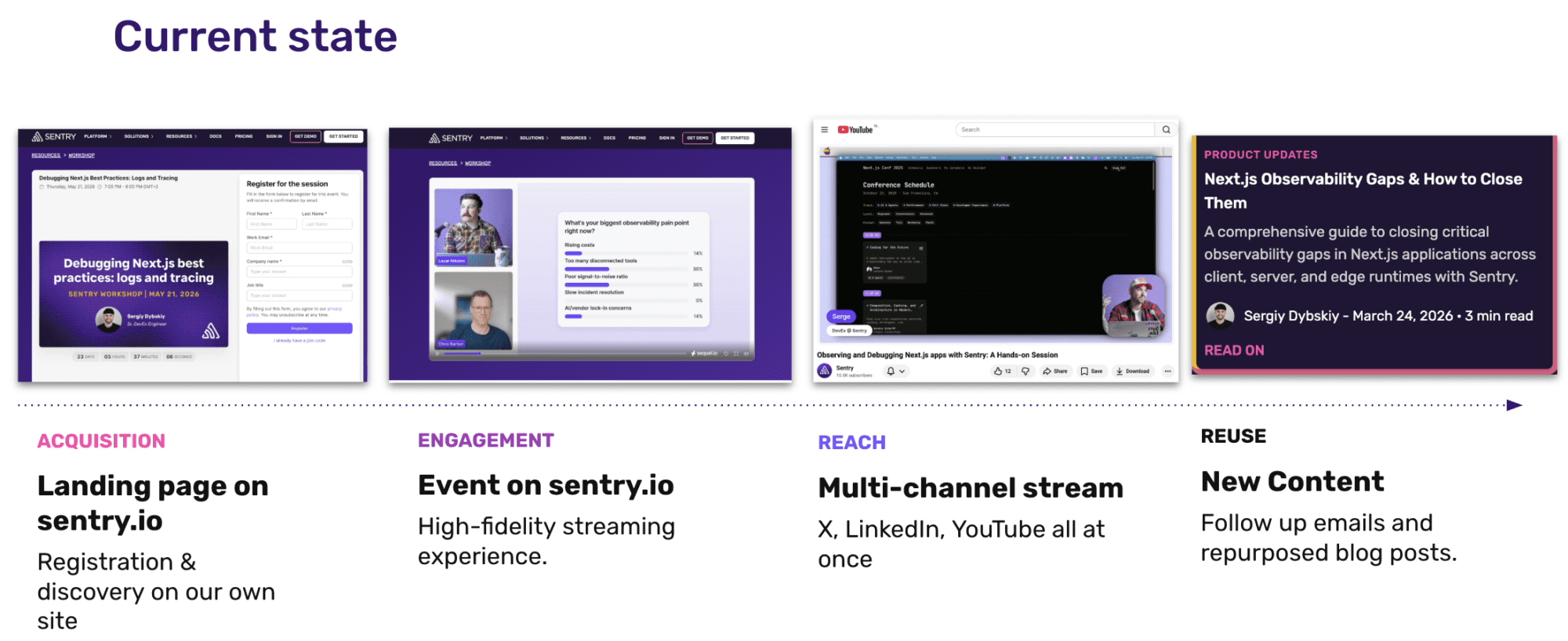
Another key element is how content is extended beyond the live event. Each workshop is repurposed into multiple formats, including blog posts, step-by-step guides, and other resources that can be accessed later. This not only reinforces the original session but also allows the content to reach new audiences over time.
Follow-up is treated as a critical extension of the experience rather than a simple recap. The team moves quickly, often engaging attendees within hours while the session is still fresh. Marketing follow-ups are designed to guide users toward specific next steps inside the product, reinforcing what they just learned and making it easy to take action.
At the same time, sales engagement is more intentional. Rather than routing every attendee directly to a sales conversation, the team uses engagement signals and account context to determine when outreach is appropriate. This ensures that users who are still in an exploratory or learning phase are nurtured appropriately, while high-intent accounts receive timely and relevant follow-up.
Over time, these interactions feed into longer-term nurture programs that continue to surface relevant content, workshops, and use cases. This creates a continuous loop where users are not only learning, but steadily increasing their usage and value within the product.
Like most successful programs, this approach was not built perfectly from the start. Early iterations revealed a number of gaps that shaped how the strategy evolved.
Some of the first workshops were too narrowly focused, centered on niche features that did not apply to a broad enough audience. While the content was technically sound, it failed to drive meaningful adoption because it did not connect to the most common user needs. In other cases, sessions leaned too heavily into product detail without anchoring the experience in a clear problem, which made it harder for attendees to see immediate value.
There were also operational challenges. Initially, workshops were treated as one-time events rather than part of a larger system, which meant valuable content was not being reused or extended beyond the live session. Without a strong post-event engine, even high-quality sessions struggled to create lasting impact.
Each of these missteps reinforced the same lesson: relevance, context, and continuity matter more than the event itself. By focusing on widely applicable use cases, designing for action, and building a system that extends beyond the live experience, the team was able to turn these early challenges into a much stronger foundation.
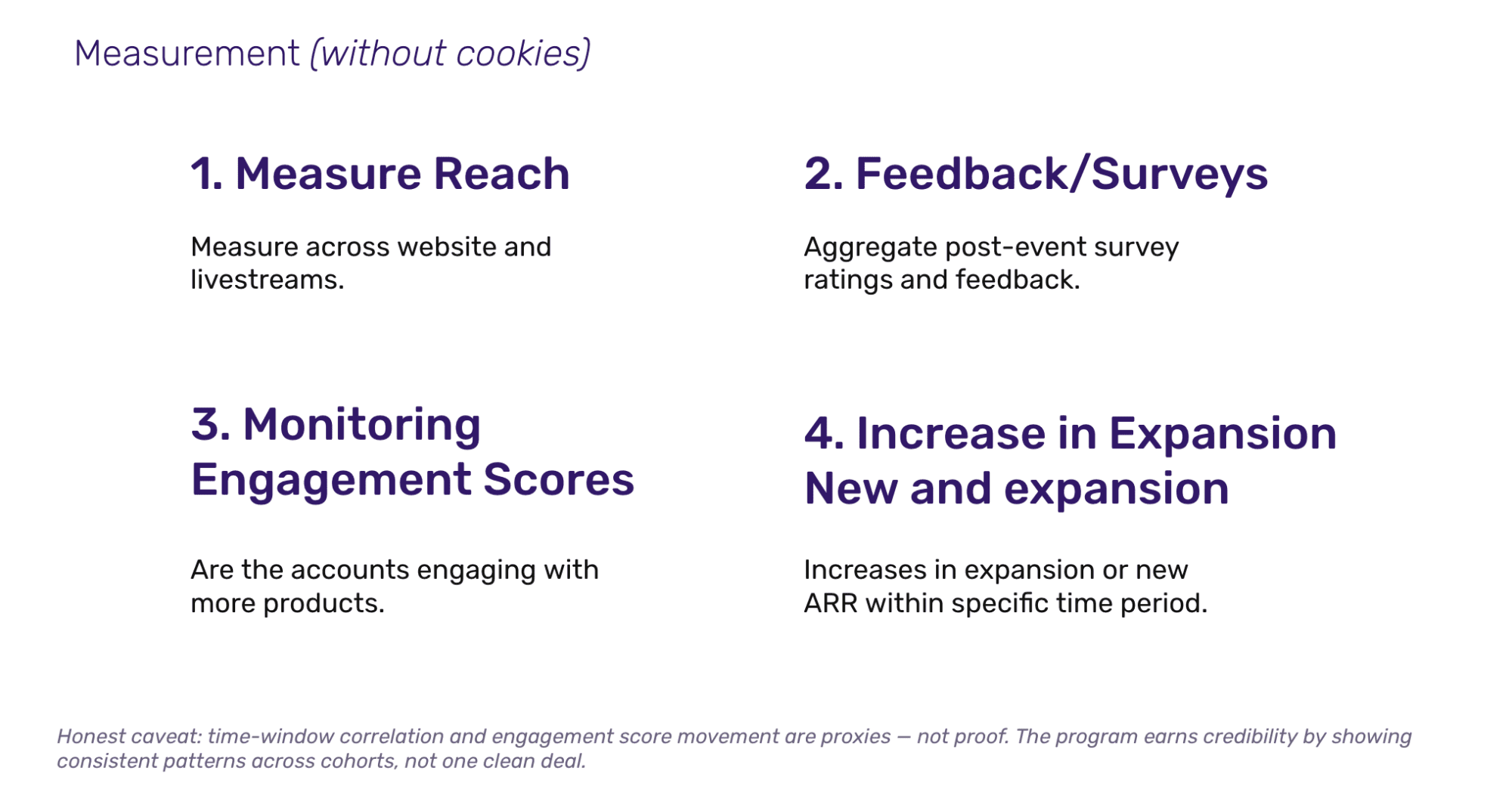
Finally, measurement is approached in a way that reflects the complexity of modern buying behavior. Rather than trying to attribute outcomes to a single interaction, the team looks for patterns across multiple touchpoints. They track attendance, monitor changes in engagement, and observe whether expansion occurs within a defined window. Over time, these patterns provide a reliable indication of the program’s impact on growth.
Importantly, success is not defined by a single conversion event, but by how engagement contributes to increased product usage and expansion over time.
Conclusion: From Engagement to Impact
What Alex Blanchette has built at Sentry represents a meaningful shift in how webinar programs are designed and measured. By focusing on what happens after the event, the team has transformed webinars from a top-of-funnel activity into a driver of real business outcomes.
The results speak to the effectiveness of this approach:
- 10% of sales-led pipeline engaging in the demo program
- 58% conversion rates
- clear influence on expansion ARR
Sentry’s program demonstrates that webinars can play a much larger role in growth when they are designed intentionally.
For teams looking to apply these ideas, the takeaway is not to simply run more webinars or adopt new formats. The real opportunity lies in rethinking the purpose of the program and designing it as part of a broader system.
Start by focusing on what users should do after they engage. Build experiences that prioritize relevance and interaction. Ensure that every session connects to a clear next step, and measure success based on how behavior changes over time.
When webinars are approached this way, they become more than events. They become a mechanism for building trust, driving adoption, and ultimately, creating sustainable growth.