Virtual events aren't what they were three years ago. The format has matured past "let's just put our conference on Zoom" into something genuinely useful for pipeline generation, if you pick the right format and run it well.
The shift worth paying attention to: B2B buyers now treat virtual events as research sessions.
They show up, engage, and leave a trail of intent signals that tell you exactly where they are in the buying process. The marketers who capture those signals are building pipeline. The ones still broadcasting one-way video into a void are wondering why their event program "doesn't work."
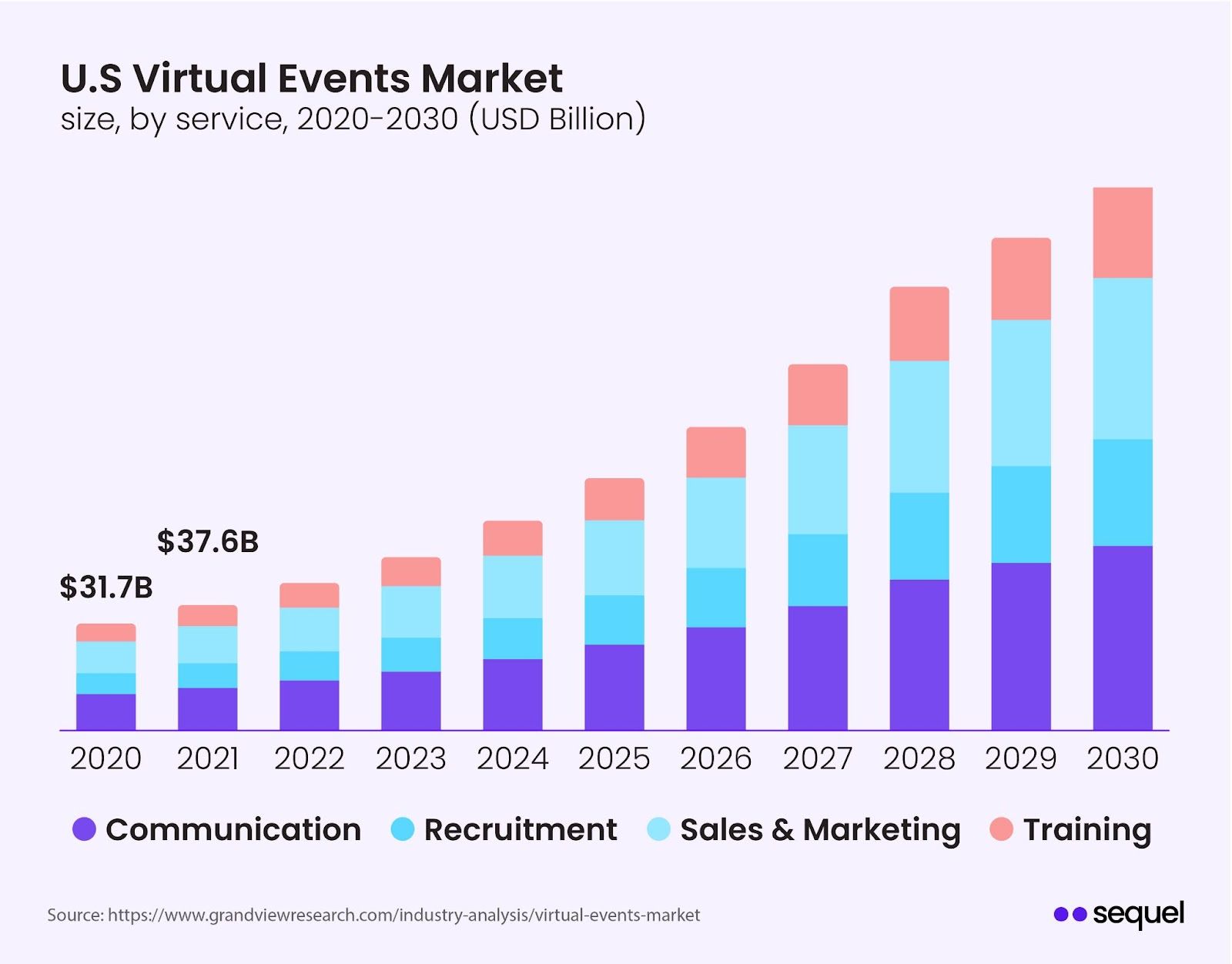
Like physical events, there are different types of virtual events to achieve various business objectives. Choosing the right event type will help you get the highest ROI from your investment.
What Are Virtual Events?
A virtual event creates an online environment where participants can interact via the web to watch a presentation, join a discussion, or have a conversation. These events can be of any size, ranging from a video conference with dozens of attendees to a broadcast with millions of viewers.
These events are gaining popularity because they're easy to set up and scale. They also offer many opportunities to deliver personalized experiences to build audience relationships and increase conversions. Using advanced digital tools, Organizers can engage with the audience, analyze data, and generate market insights.
Meanwhile, attendees can learn from industry experts and meet like-minded individuals from anywhere without special equipment besides a smartphone or computer and an internet connection.
What Changed with Virtual Events (2026)
- 82% of organizers create on-demand content from their events, and more than half gate it for lead capture. Your live event is the starting point, not the whole strategy.
- 57% of webinar registrations convert to attendees (MarketingProfs). Personalized landing pages convert at 25%. Generic "register for our webinar" pages convert at... less.
- AI adoption for event content went from fringe to default in about a year. The share of organizers not using AI dropped from 50% to 25% (EventVesta). Most of this is repurposing: turning one live session into blog posts, clips, and email content.
12 Types of Virtual Events For Marketers
Here are the various online event formats, what they entail, and how you can use them to meet your marketing objectives:
1. Webinars
The polls, chat messages, and Q&A questions your audience submits are the buying signals you've been hunting endlessly for. Someone who stays for 45 minutes and asks two questions about pricing integration is telling you something. Someone who drops off after the intro isn't.
Wistia's benchmark data shows nearly 90% of marketers now repurpose webinar content into blogs and social clips.
If you're running webinars and not doing this, you're leaving content on the table.
One thing that still trips up a lot of teams: sending webinar traffic to a third-party domain.
You lose the SEO value, you lose the visitor analytics, and your audience leaves your site to attend your event. Embedding the webinar directly on your website keeps the traffic where it belongs and gives you 100% ownership of your visitor analytics and SEO value.
2. Virtual Conferences
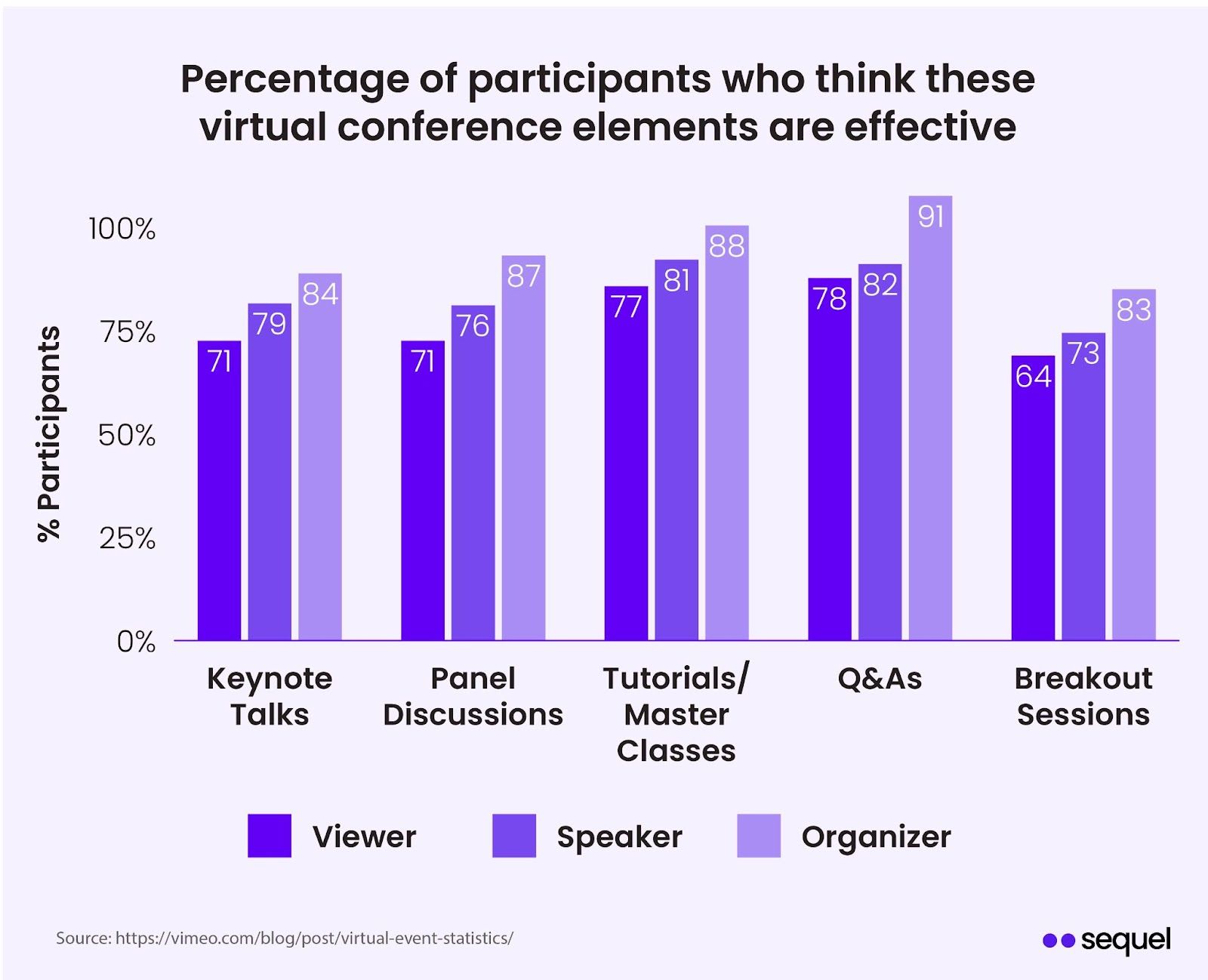
Virtual conferences work well when you want to reach a global audience without asking everyone to fly somewhere.
The production bar is higher than a standard webinar. You need multiple speakers, a clear agenda structure, and enough variety to keep people engaged across a full day or more.
But the trade-off is real: you can reach ten times the audience at a fraction of the cost of a physical conference, and every interaction generates data you can act on.
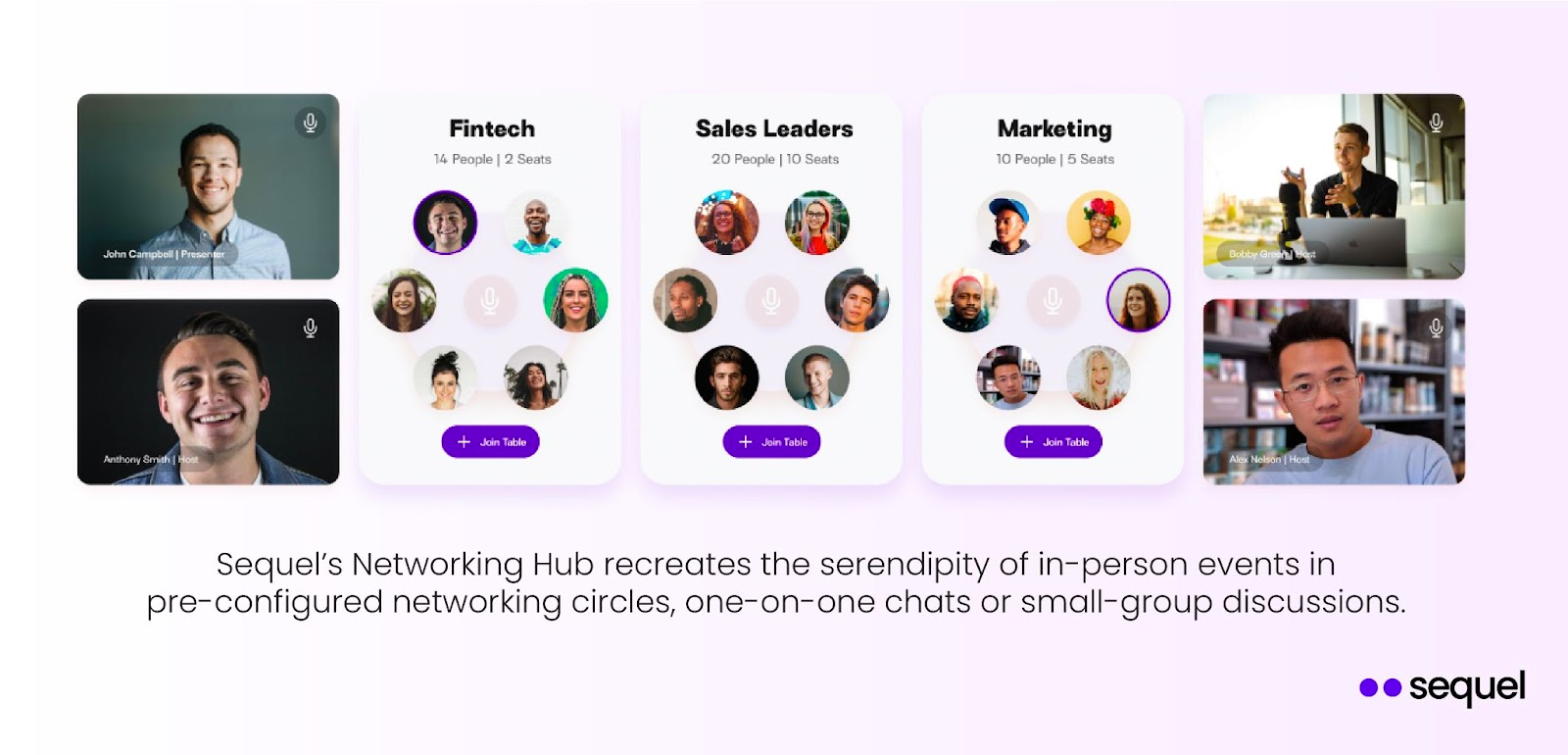
Pro tip: Use Sequel's Networking Hub to create opportunities for attendees to meet each other and replicate the serendipity of in-person events.
3. Virtual Customer Advisory Boards
Radiant Logic moved its Customer Advisory Board to a virtual format and found that participation actually went up. Turns out, senior executives are more willing to give you 90 minutes on video than two days of their calendar.
These work best as small, curated sessions: 10 to 25 participants who actually use your product and have opinions about where it should go.
The output feeds directly into product roadmap decisions.
4. Product Launches
Adobe Summit 2025 used dedicated digital sessions to position new platform capabilities in front of thousands of B2B buyers simultaneously. You don't need Adobe's budget to pull off a launch event, but you do need a clear story, a live audience, and a plan for what happens after the stream ends.
The real value is in what you do with the attendee list. Use your CRM integration to route the most engaged attendees (the ones who asked questions, stayed until the end, clicked through to pricing) directly to sales while the session is still fresh.
5. Virtual Summits
The format builds credibility fast. When you invite recognizable names to speak, they bring their audiences with them. That cross-promotion effect can double or triple your registration numbers compared to a solo webinar.
The content tends to be more conversational than a standard webinar, which makes it better for mid-funnel audiences who already understand the category and want to hear how practitioners are thinking about it.
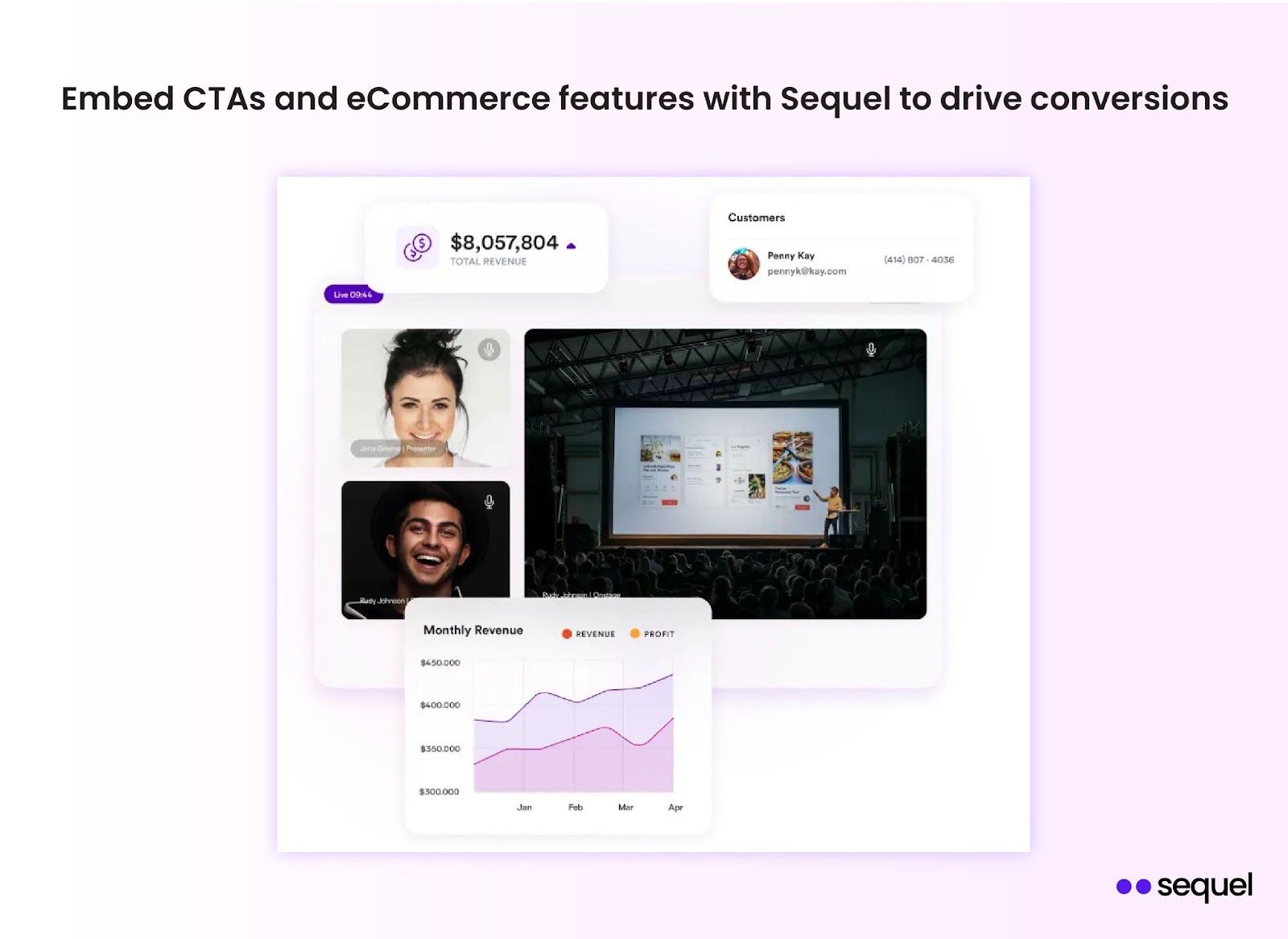
Pro tip: Use Sequel to add CTAs on the screen at the right time to drive conversions.
6. Immersive Brand Experiences
LinkedIn launched a Metaverse Hub offering 3D virtual exhibition halls with avatar-based navigation, downloadable resources, and live video access. B2C brands like Samsung and Nike were early here, but B2B is starting to experiment with the format for trade shows and product showcases.
The honest take: this format requires more production effort than most teams have bandwidth for right now. But if you're in a visual or experiential category, it can create a memorable impression that a standard webinar simply can't.
7. Partner and Channel Events
The format works well as a recurring series (monthly or quarterly) rather than a one-off. Partners who regularly attend your enablement sessions sell more effectively because they're actually current on what you offer.
8. Virtual Trade Shows and Expos
The format is strongest for top-of-funnel awareness in regions where you don't have a physical presence.
If you're trying to enter EMEA or APAC markets and can't justify the cost of exhibiting at a physical show, a virtual expo gets you in front of the right audience at a fraction of the cost.
9. Virtual Roadshows
You can deliver sessions in local languages, invite regional speakers, and address market-specific pain points.
Virtual roadshows tend to generate higher engagement than large global events because the content feels relevant. An audience in Germany doesn't want the same talk you gave in San Francisco. They want to hear about their regulatory environment, their competitive landscape, and their customer expectations.
10. Ask Me Anything (AMA) and Fireside Chats
Both formats accelerate trust because they're hard to fake. A rehearsed webinar tells me your marketing team is good. An AMA where your CEO answers tough questions live tells me something about the company itself.
Pro tip: Use Sequel to add interactive elements such as Q&A, poll, and chat to increase audience engagement.
11. Internal Webcasts and Town Halls
The format is straightforward but the stakes are real. Misalignment compounds fast in remote teams. A well-run internal webcast that covers quarterly priorities, answers questions from the floor, and records for people in other time zones is worth more than most internal Slack threads combined.
12. Gamified Networking and Entertainment
Think of these as the virtual equivalent of the happy hour between afternoon sessions. They don't generate pipeline directly, but they deepen relationships with existing customers and turn attendees into people who actually want to come back for the next event.
Sequel's Networking Hub, for example, creates randomized face-to-face video connections that mimic the spontaneous conversations you'd have at a physical event.
Which Virtual Event Type is Right For Me?
Which type of event should you use, and what format is best for your business needs? Here are some questions to consider:
- What is the goal of the event?
- Who is your target audience?
- How do they prefer to consume content?
- Will you invite guest speakers?
- Will you have sponsors or virtual booths?
- How will you engage attendees?
- What event management expertise do you have available?
- Do you plan to monetize the event content?
- What metrics will you use to measure success?
- Will it be a virtual or hybrid event?
Thorough event planning is the key to hosting a successful virtual event. You must build engaging content, recruit the right talents, implement effective promotional tactics, and most importantly, use a robust virtual event platform to create a seamless, on-brand, engaging experience.
Look for these features in a virtual event platform to help you deliver a memorable event and meet your business objectives:
- Webinar features (e.g., poll, Q&A) to create an engaging experience.
- eCommerce capabilities to drive conversion during and after the event.
- Video conferencing and networking features (e.g., Sequel's Networking Hub) to increase engagement.
- Pre-registration functions to build buzz before the event and increase attendance.
- Community features to engage attendees before, during, and after the event.
- Sufficient livestreaming capacity to handle events of any size.
Sequel offers all these key features and more in a single solution. You don't have to cobble together different apps (e.g., Zoom) and hope they'll play nice with each other. Plus, you can embed the virtual event on your website without writing a single line of code, so you can minimize distraction by keeping the audience on your online properties.
Book a demo to see how easy it is to produce a virtual or hybrid event to meet any business objectives with Sequel.